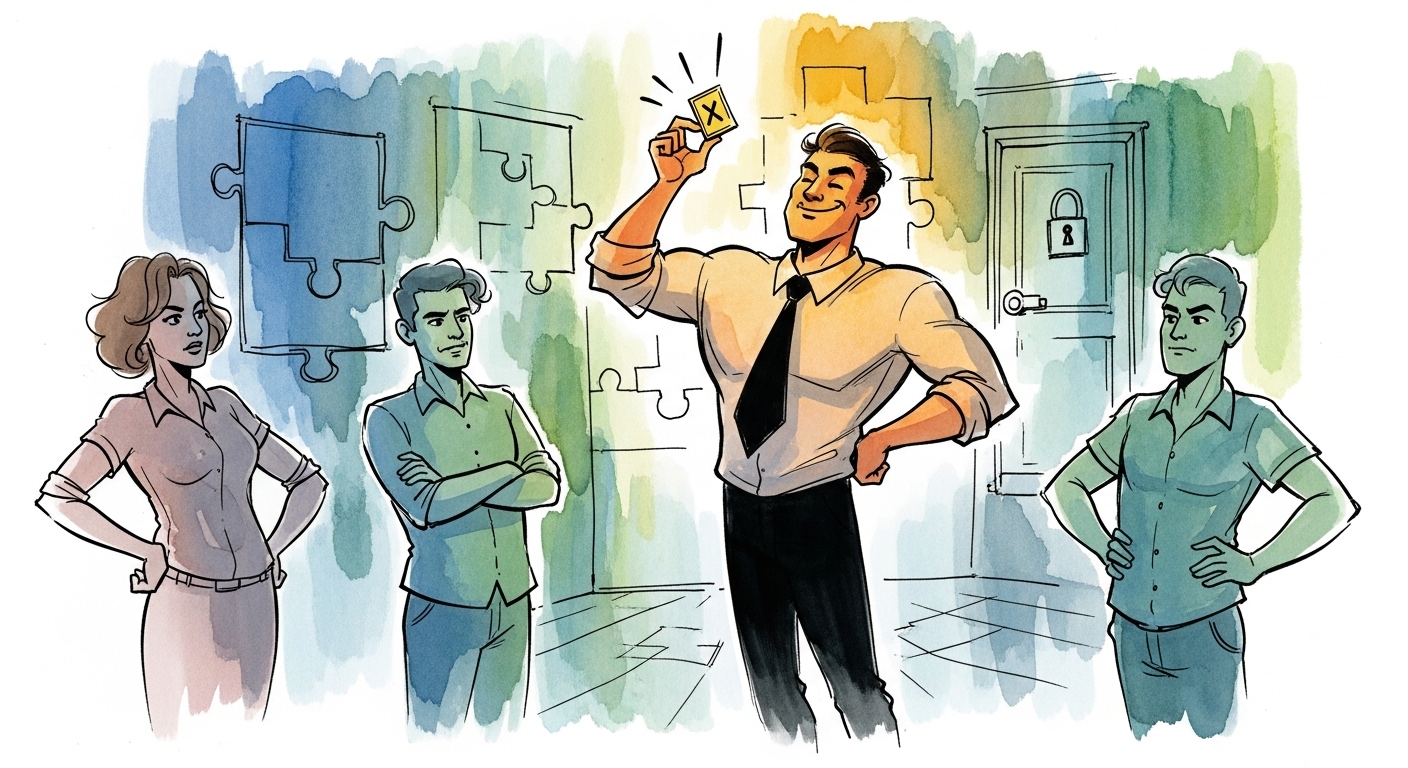

A single person’s narcissism can undermine an entire team’s morale and performance, according to research examining how different types of narcissistic behaviour influence group dynamics in high-pressure situations.
Researchers invited over 100 people to complete escape room challenges in small groups, observing their interactions and behaviours throughout the tasks. The findings were published in the journal Behavioural Sciences.
Teams with higher levels of narcissistic rivalry showed significantly less unity and performed worse in the escape room. Researchers identified two distinct forms of narcissism among participants: narcissistic admiration, where individuals are charming, confident and drawn to the spotlight, and narcissistic rivalry, where people are combative, competitive and quick to dismiss others’ ideas or take offence.
“Although this took place in a fun, social setting, the teams still needed to build trust, share ideas and plan together to complete the challenges,” explained Dr Reece Bush-Evans, Senior Lecturer in Psychology at Bournemouth University, who led the study. “These are exactly the skills needed for success in real-world teams. Our results showed that when one person believes they’re superior to their teammates, it can damage team dynamics and lead to failure.”
Cohesion and conflict
Before and after the challenge, all participants rated themselves and their teammates on traits such as friendliness, confidence, trustworthiness, and aggression. The researchers then examined how these perceptions influenced team cohesion, team conflict and overall performance.
Competitive and rivalrous individuals were more likely to ignore or dismiss their teammates’ ideas, withhold information, and find the experience more frustrating, thereby wrecking the team bond needed to complete the challenges, the research found.
In contrast, narcissistic admiration didn’t seem to help or harm performance, though those individuals were increasingly viewed as less hardworking and more arrogant by their teammates as the challenge progressed.
“Confidence and charm can easily be mistaken for competence,” Dr Bush-Evans concluded. “Our study shows that these traits can actually limit what a team achieves. The most successful teams weren’t the loudest, but the most cooperative. Leaders should value good listeners just as much as outspoken voices.”
The researchers believe these insights are relevant not only for social settings but also for modern workplaces, including face-to-face, online, and hybrid teams.
The study was led by Dr Bush-Evans at Bournemouth University in collaboration with researchers at the Universities of Southampton, Portsmouth and Winchester.



