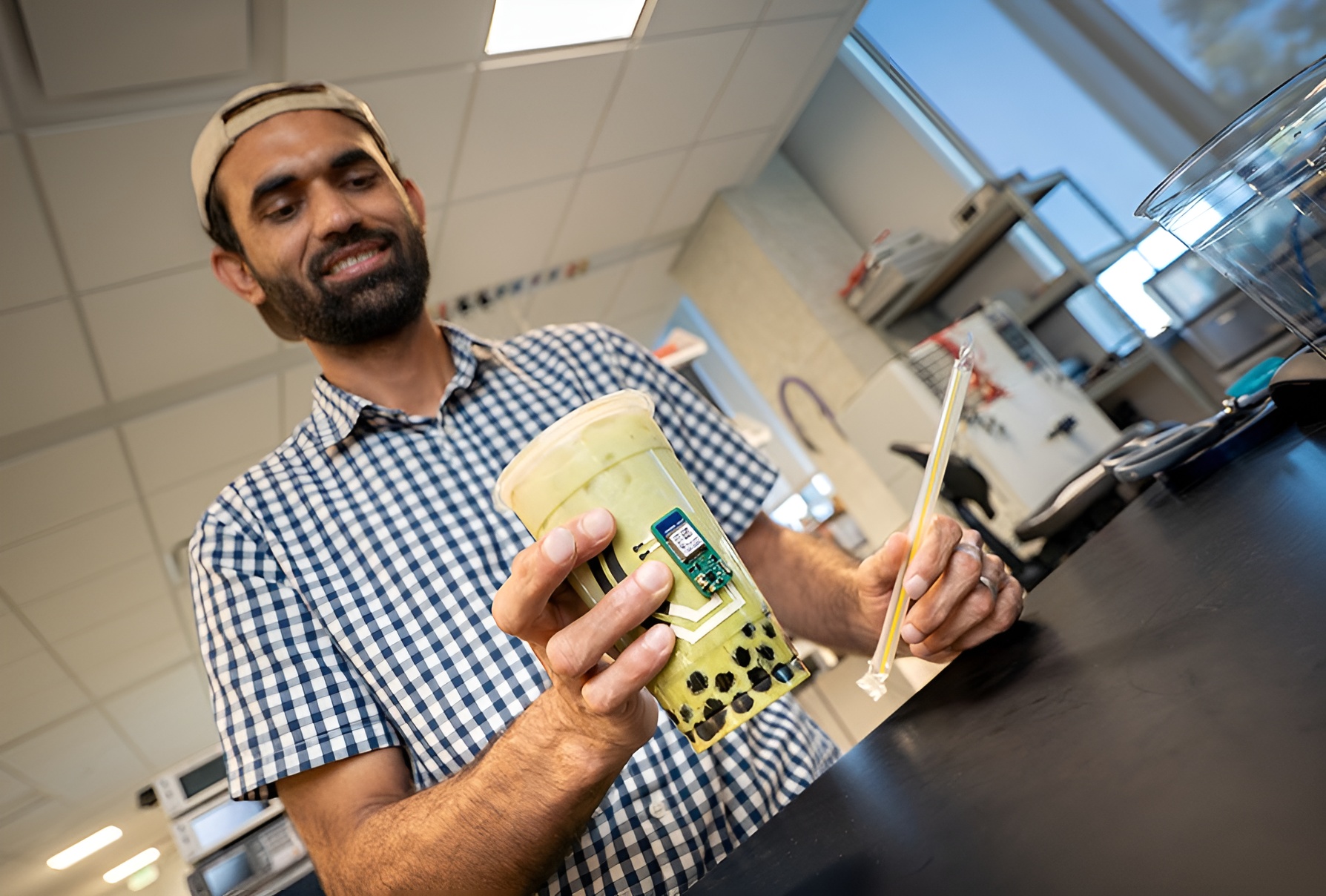

Engineers at the University of California San Diego have developed a battery-free electronic sticker that monitors a person’s vitamin C levels using sweat from their fingertips. The flexible sticker attaches to everyday objects, such as a drinking cup, turning it into a health sensor.
The device, published in Biosensors and Bioelectronics, offers an alternative to current vitamin C testing, which requires invasive blood draws and costs around $50 per test in the US, making frequent monitoring impractical.
“By turning everyday objects like cups or bottles into smart sensors, people can gain real-time insights into their health and wellness without changing a thing about their daily routine,” said study co-senior author Patrick Mercier, a professor at the UC San Diego Jacobs School of Engineering.
The sticker uses a porous hydrogel pad to collect trace amounts of sweat. A built-in biofuel cell converts the chemicals in sweat into electricity, which powers a sensor and a custom-printed circuit board that wirelessly transmits the data.
Prolific sweat producers
Fingertips are one of the body’s most prolific sweat producers — up to 1,000 times more than most other areas — allowing the sticker to operate even when the user is at rest. Because it is battery-free, the system could be manufactured for “just a few cents per unit”.
In tests, the device was securely attached to a drinking cup and accurately tracked vitamin C changes after participants took a supplement or drank orange juice, remaining powered for more than two hours.
“This is an elegant extension of our early fingertip sweat-based technology toward effortless, continuous monitoring of personal nutrition and health,” said Joseph Wang, one of the study’s co-senior authors.
The team plans to expand the technology to measure other nutrients and send data to smartphones. “We want to make access to health data as frequent and effortless as holding your morning coffee cup or orange juice bottle,” Mercier added.



