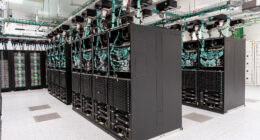

Meta has announced it will invest over $600 billion in the US by 2028 to support artificial intelligence technology, infrastructure and workforce expansion, saying the investment is creating jobs, supporting local economies and reinforcing America’s technological leadership.
The company said its data centre projects have supported over 30,000 skilled trade jobs and 5,000 operational jobs since 2010, and it is bringing more than $20 billion in business to subcontractors across the US.
However, Meta and other tech giants are increasingly turning to complex debt-financing options to fund the spending, with instruments including asset-backed securities and off-balance-sheet vehicles reminiscent of those used before the 2008 financial crisis, reports The New York Times.
Google, Meta, Microsoft and Amazon have collectively spent $112 billion on capital expenditures in the past three months to fund AI infrastructure. The scale of spending has spooked investors, with Meta’s stock tumbling 11 per cent after the company revealed its aggressive capital expenditure plans.
Shift to debt structures
Whilst Meta, Microsoft, Amazon and Google previously relied on their own cash flow to invest in data centres, they have more recently turned to loans. When Meta structured its $30 billion debt offering for its new data centre in Louisiana, the largest private capital transaction on record, Morgan Stanley arranged the debt to sit in a custom, off-balance-sheet special purpose vehicle.
About $13.3 billion in asset-backed securities backed by data centres has been issued across 27 transactions this year, a 55 per cent increase over 2024. Investment giant Blackstone is on the cusp of closing a $3.46 billion commercial-mortgage-backed securities offering to refinance debt held by QTS Data Centers, representing the largest deal of its type this year.
The bonds would be backed by 10 data centres in six markets, including Atlanta, Dallas and Norfolk, Virginia, that together consume enough energy to power Burlington, Vermont, for half a decade.
According to McKinsey, $7 trillion in data centre investment will be required by 2030 to keep up with projected demand. Morgan Stanley estimates that $800 billion in private credit will be needed over the next two years to fund data centres, with special-purpose vehicles becoming a more popular way to structure debt.
Warnings of mounting risk
The Bank of England warned in October that as companies continue to shift from using their own cash flow to amassing debt for data centres, risk will continue to mount. AI stocks now account for roughly 44 per cent of the S&P 500 market capitalisation, up from 26 per cent in late 2022.
The cyclically adjusted price-to-earnings ratio of the S&P 500 is close to its dot-com peak, with AI stocks having a median forward 12-month price-to-earnings ratio of 31 times, compared to 19 times for the broader S&P 500 index.
The Bank of England noted that multiple factors make the transformational economic impact of AI uncertain. At the same time, the physical infrastructure that underpins AI model training and inference is expected to require trillions of dollars of investment over the next five years, a significant share of which is expected to be financed by debt.
“This is a fast-evolving topic, and the future is highly uncertain,” the Bank of England wrote, adding that if hyperscalers are unable to generate enough profit to offset costs related to capital expenditures, systemic risk could enter credit markets.
According to Menlo Ventures, only three per cent of consumers pay for AI-related services, amounting to about $12 billion per year.
Meta’s local investments
Meta said its investments have enabled hundreds of millions in new and updated grid infrastructure through direct investment, and 15 gigawatts of new energy added to power grids across the US.
The company said its data centre designs minimise water usage and are significantly more efficient than the industry standard. Meta plans to be water positive by 2030.
Through its Data Center Community Action Grants, Meta has given $58 million to schools, non-profits and community projects. The company said it is contributing millions of dollars to bill assistance programmes that help low-income households pay for heating and cooling costs.
Goldman Sachs estimates that 60 per cent of data centre power demand growth through 2030 will need to be met with new capacity, whilst the International Energy Agency estimates that electricity demand from data centres worldwide will more than double by 2030 to a consumption level higher than that of Japan.