University of Virginia (UVA) researchers have pioneered a new 3D-printable polymer that “gets along with the body’s immune system,” a breakthrough that could lead to safer medical technology for organ transplants and advanced battery technologies.
The new material, detailed in the journal Advanced Materials, is based on polyethylene glycol (PEG), which is already used in biomedical technologies. However, current PEG networks are brittle and cannot stretch, limiting their use in flexible applications like scaffolding for synthetic human organs.
The UVA team, led by Liheng Cai, created a “foldable bottlebrush” design to solve this. This approach stores extra length at the molecular level, using flexible side chains on a central backbone that can collapse like an accordion and unfold to make the material highly stretchable.
“Our group discovered this polymer and used this architecture to show any materials made this way are very stretchable,” Cai said.
The bottlebrush network
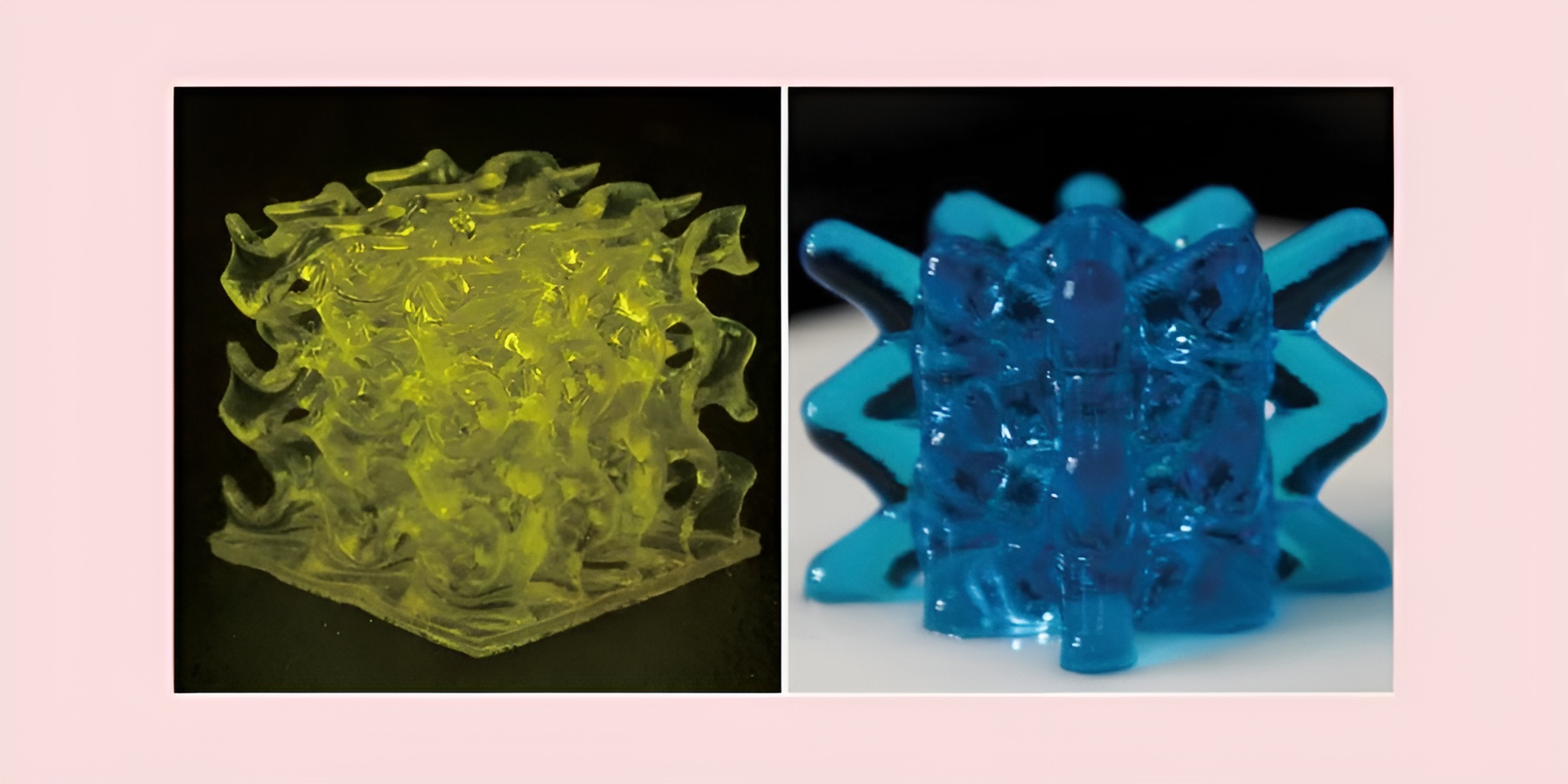
Baiqiang Huang, the paper’s first author, applied this concept by exposing a PEG precursor mixture to ultraviolet light for a few seconds. This process forms the bottlebrush network, resulting in 3D-printable, highly stretchable hydrogels and elastomers.
“We can change the shape of the UV lights to create so many complicated structures,” Huang said, noting they can be made soft or stiff while remaining stretchy.
The team confirmed the material is “biologically friendly” by culturing cells alongside it, demonstrating they were compatible and suitable for use inside the body.
The material also shows promise as a high-performance solid-state electrolyte for advanced batteries. Compared to existing materials, it shows greater electrical conductivity and much higher stretchability at room temperature.
“This property highlights the new material as a promising high-performance solid-state electrolyte for advanced battery technologies,” Cai said.