
Researchers at the University of Otago have produced a detailed blueprint of a bacteriophage, a type of virus that selectively kills bacteria, to further its potential in the fight against antibiotic-resistant superbugs.
The work is crucial as scientists search for antibiotic alternatives to combat the increasing risk of antimicrobial resistance. Lead author Dr James Hodgkinson-Bean, who completed his PhD at Otago, said bacteriophages are “extremely exciting” tools.
“Bacteriophage viruses are non-harmful to all multicellular life and able to very selectively target and kill a target bacterium. Due to this, they are increasingly being researched and applied in ‘phage therapy’ to treat highly drug-resistant bacteria,” he says.
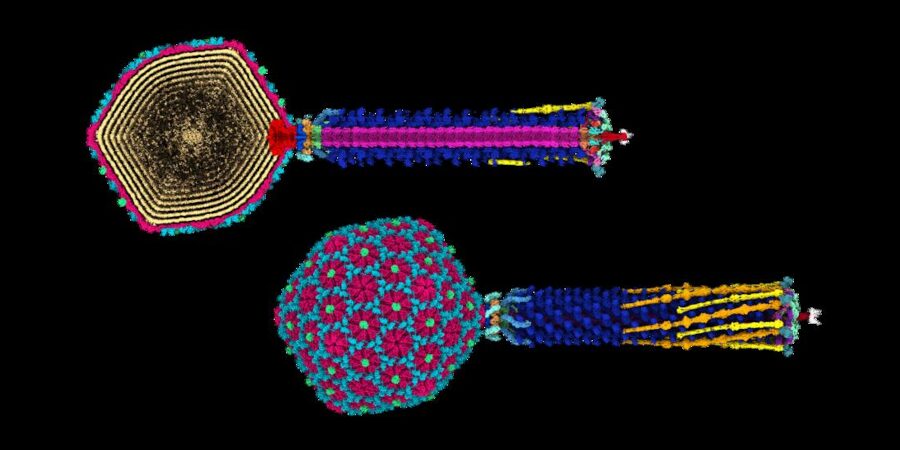
The study, published in Science Advances, involved researchers from Otago and the Okinawa Institute of Science and Technology. They explored the structure of Bas63, a virus that targets E. coli, in molecular detail to understand how its “tail” works during an infection.
Senior author Associate Professor Mihnea Bostina said the blueprint has applications beyond medicine.
Medical, agricultural, and industrial applications
“Our detailed blueprint of a bacteriophage advances rational design for medical, agricultural, and industrial applications, from treating infections to combating biofilms in food processing and water systems,” Bostina says.
The research also provides new insights into evolution. Dr Hodgkinson-Bean notes that for viruses, 3D structure is more informative of distant evolutionary relationships than DNA. The team found features in Bas63 only previously seen in very distantly related viruses, revealing unknown evolutionary links.
“We know through structural studies that bacteriophages are related to Herpes viruses – this relationship is thought to extend back billions of years to before the emergence of multicellular life. For this reason, when we look at bacteriophage structure, we are looking at living fossils, primordial ancient beings,” Dr Hodgkinson-Bean says. “There is something truly beautiful about that.”