
Austria’s timber industry is turning to automation to solve a critical labour shortage, with a new project deploying drones, smart sensors, and self-loading cranes to make dangerous forest work safer.
Graz University of Technology (TU Graz) has announced the launch of “AutoForst,” a 6 million euro research initiative designed to digitise the forestry value chain.
With 440,000 employees and a value added of around 43 billion euros, the forestry sector is a massive economic driver for Austria. However, the industry faces a severe shortage of skilled workers due to the physically demanding and often dangerous nature of the work.
“Forestry companies cannot find enough people who are capable of carrying out the dangerous and difficult tasks,” said Mario Hirz from the Institute of Automotive Engineering at TU Graz, who is heading the project.
Automating danger work
To tackle this, a consortium of three universities and more than 20 industrial partners will spend the next four years developing fully automated machines.
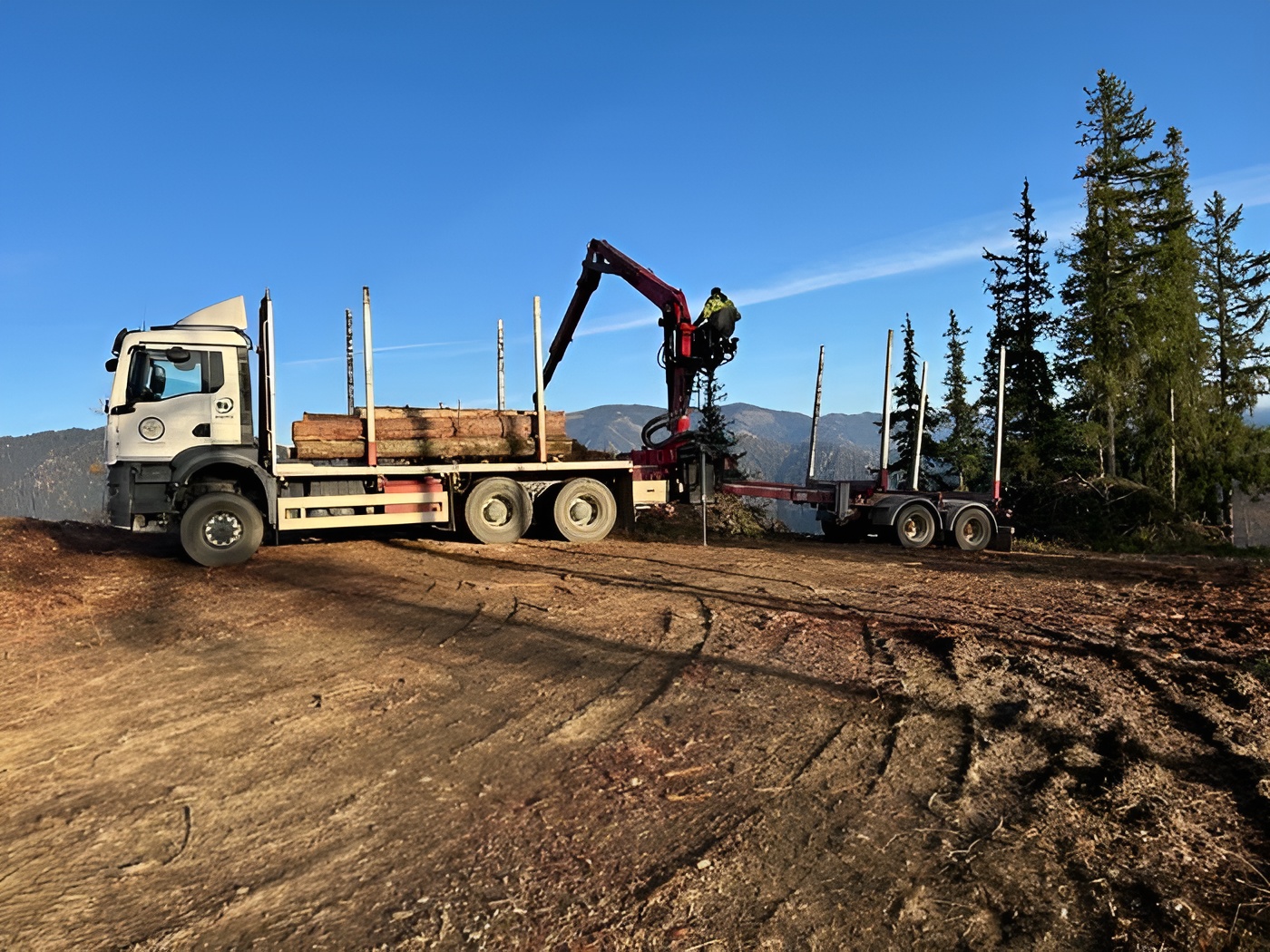
A key focus is the dangerous task of loading heavy logs onto trucks. Researchers have already developed a prototype of an automated loading crane that can lift logs independently, allowing workers to simply monitor the process from a safe distance.
The new project will advance this technology by integrating sensor and camera systems that can recognise critical situations, such as a person wandering into a danger zone or a truck support being misaligned.
“We want to develop digital and automated systems that make work along the forestry value chain more efficient, easier and safer,” Hirz explained, adding that this could make the profession attractive to new groups of people.
Drone defense
Beyond heavy machinery, the project aims to digitise the forest itself. The team is developing systems to record key data — such as wood type, quality, and tree diameter — the moment a trunk is harvested. This data will be transmitted in real time, allowing wood to be tracked along the entire logistics chain to sawmills or paper manufacturers.
The initiative also includes a high-tech approach to forest health. Drones equipped with special cameras will be deployed to automatically recognise diseased trees caused by bark beetle infestations.
“In the event of a bark beetle infestation, the diseased trees must be removed from the forest within a few days to prevent the insects from spreading further,” said Hirz, noting that drones save “an enormous amount of time” in detection.