
With artificial intelligence projected to consume over 13 per cent of the world’s electricity by 2028, researchers have unveiled a new computing system that uses light instead of electricity to process data, potentially tackling the industry’s looming energy crisis.
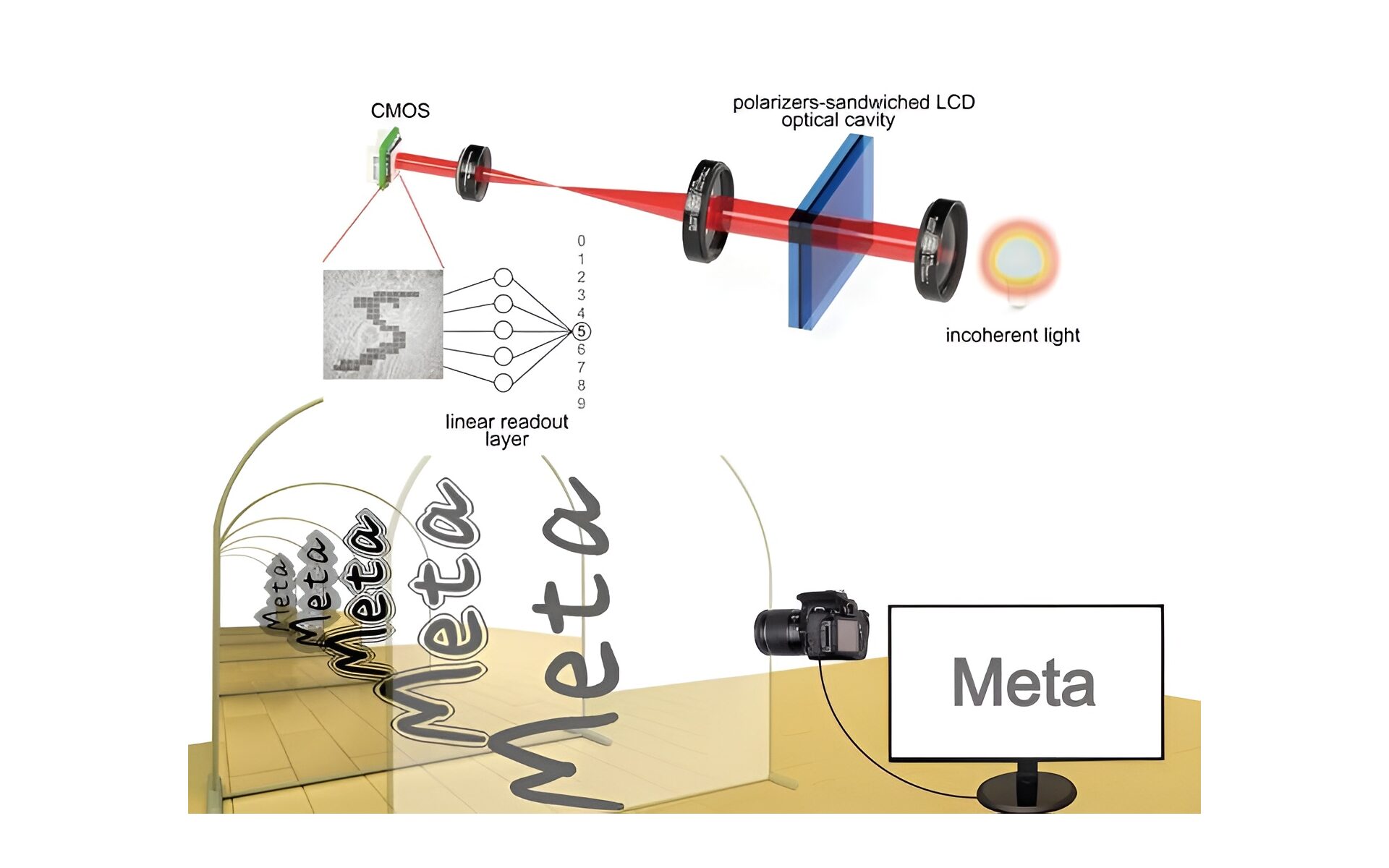
Engineers at Penn State University have developed a prototype that replaces traditional electronic circuits with a loop of tiny optical elements, creating an “infinity mirror” effect that processes information at the speed of light.
Detailed in a paper published in Science Advances, the system addresses one of the biggest bottlenecks in tech: the massive heat and energy generated by the silicon chips that currently power the AI boom.
Computing at light speed
Traditional computers rely on billions of electronic transistors to process data as binary 1s and 0s — a reliable but power-hungry method. Optical computing, by contrast, encodes data into light beams.
“Optical computing offers key advantages for certain math-heavy tasks because photons, the atomic building blocks of light, don’t interact with each other under normal conditions,” explains Xingjie Ni, associate professor of electrical engineering at Penn State. “This means many light signals can pass through the same system simultaneously.”
While using light for computing isn’t new, previous attempts struggled to handle the complex, “non-linear” decision-making that AI requires without using high-powered lasers or exotic materials.
Light fantastic
Ni’s team solved this by creating a compact, multi-pass loop. By bouncing light repeatedly through the system — like an infinity mirror — the device allows the signal to “build up” the necessary complexity to perform advanced calculations using standard components found in everyday LCD displays.
The researchers believe this technology could move AI out of massive data centres and into smaller devices.
“Companies are spending enormous amounts on electricity and cooling,” says Ni. “Shrinking the size and power of AI hardware would push intelligence outward — into cameras, sensors, cars, drones, factory robots and medical devices.”
This would allow devices to process data in real time without draining batteries or sending sensitive information back to the cloud. The team is now working to turn the proof-of-concept into a programmable module that can plug into existing computing platforms.