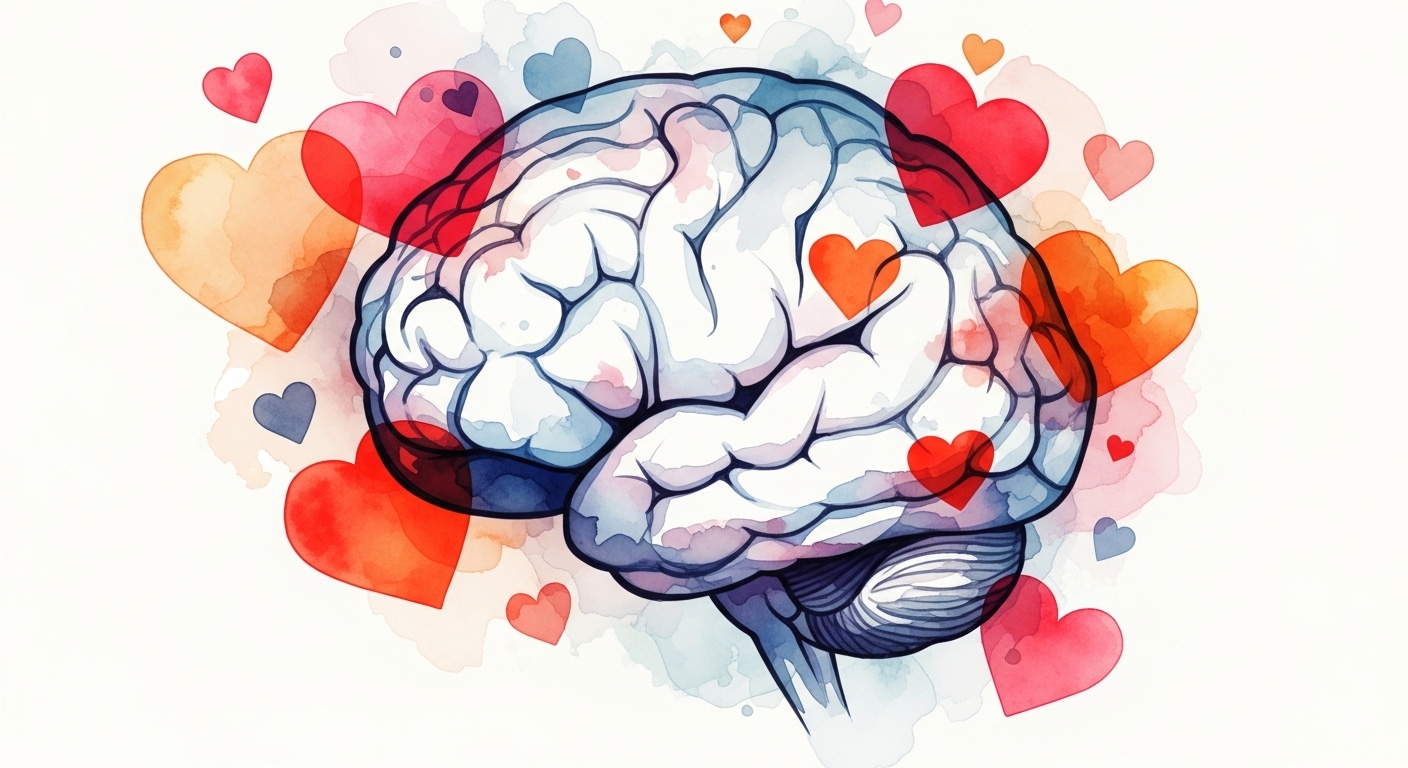
The racing heart and sweaty palms of a new romance are well-known symptoms of falling in love, but mental health experts say the most profound changes are happening in the brain — specifically, the parts responsible for spotting red flags.
With Valentine’s Day approaching, experts at Hackensack Meridian Health note that brain scans reveal that the “euphoria” of early love isn’t just a feeling but a chemical takeover that suppresses the neural pathways used for critical judgment.
“When we’re falling in love, the brain actually quiets the wiring responsible for negative emotions and making critical judgments,” says Dr Gary Small, director of Behavioural Health Breakthrough Therapies. “The part of your brain that you use to assess other people, potentially seeing red flags, essentially takes a break.”
The chemical reward
This neural suspension of disbelief allows people to bond with a new partner without being overly critical of their flaws.
Simultaneously, the brain releases a flood of dopamine, activating the reward system in the same way it reacts to good food or other pleasures. This chemical rush focuses attention and energy on the partner to encourage reproduction, while lowering levels of mood-regulating chemicals, which can lead to obsessive, “can’t-stop-thinking-about-them” thoughts.
“Your brain is essentially rewarding you for falling in love,” Dr. Small explains. “So it turns out there’s actually some scientific truth to the saying that ‘love is blind.’”
From passion to attachment
As a relationship matures, the brain’s chemistry shifts from the chaotic highs of dopamine to the stability of oxytocin and vasopressin.
These chemicals, known as “bonding hormones,” are released during physical contact and intimacy to foster feelings of attachment, security and calmness — crucial for long-term commitment and raising children.
However, this transition often means the initial “spark” fades. Experts suggest that long-term couples can reignite that early brain activity by hacking their own reward systems.
“To sustain this level of passion over time, it is important to keep the brain’s reward system active and online,” says Gina Radice-Vella, chief psychologist at Jersey Shore University Medical Center. “We can do this by pursuing novel activities with our partner or engaging in shared pleasurable activities.”
The three ingredients of love
Psychologists note that a “perfect” love requires a balance of different elements. Referring to Robert Sternberg’s “Triangular Theory of Love,” experts identify three fundamental components: intimacy, passion, and commitment.
“Romantic love is a blend of intimacy and passion, while companionate love is a blend of intimacy and commitment,” explains Tara Lally, a relationship expert at Ocean University Medical Center. “Consummate love involves all three components and is considered the strongest and most enduring, though also rare.”