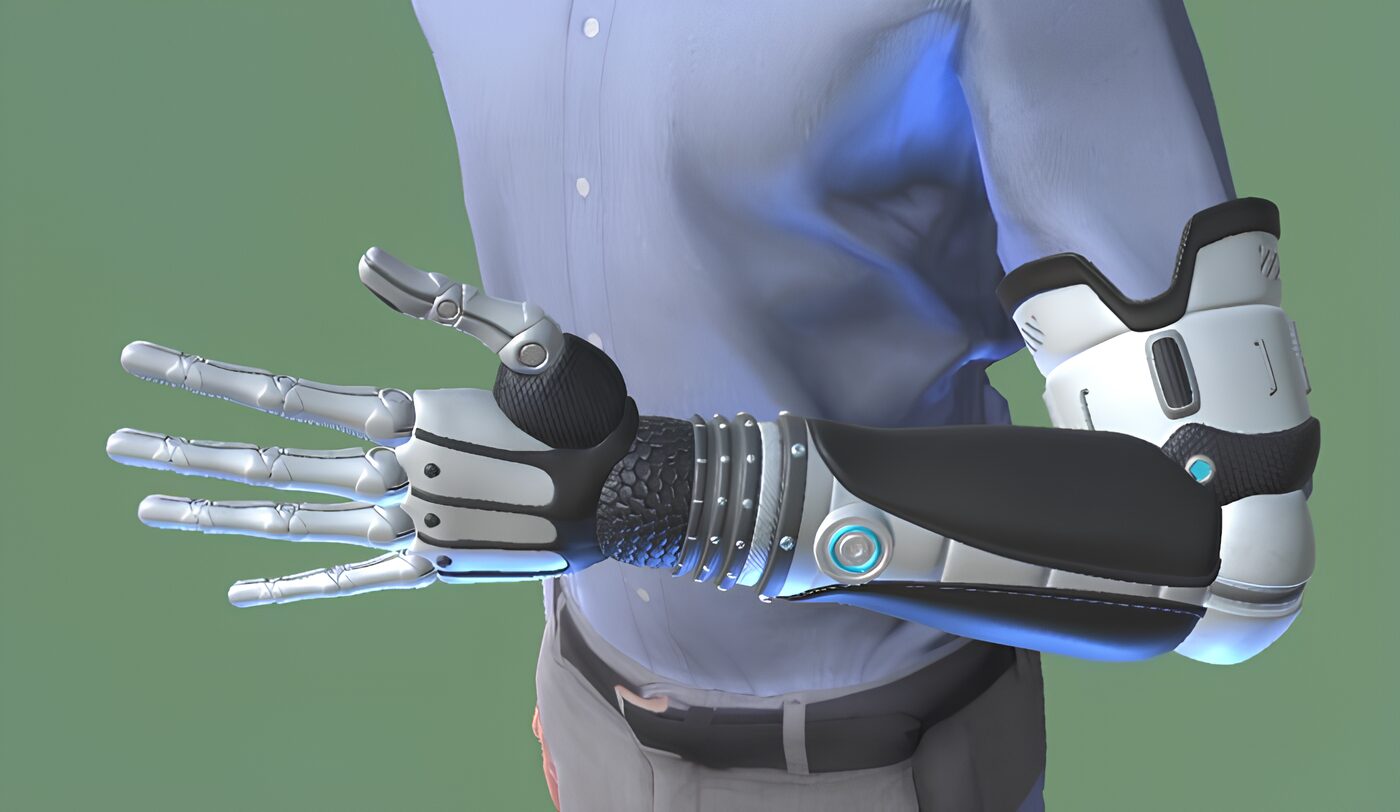

For a robotic limb to feel like part of the human body, it needs to move at a specific speed, according to new research from the Toyohashi University of Technology (TUT).
As artificial intelligence advances, prosthetic arms that can assess situations and move autonomously are becoming a reality. However, a study published in Scientific Reports suggests that if these devices move too fast or too slow, users are likely to find them “unsettling” or feel they do not belong to their body.
The research found that a movement duration of approximately one second — closely mirroring natural human reaching — maximised the user’s sense of ownership and the device’s usability.
The ‘Goldilocks’ speed
To understand how speed affects the psychological acceptance of prosthetics, the team used virtual reality to simulate an autonomous limb.
Nineteen participants wore a virtual avatar in which their left forearm was replaced by a robotic prosthetic. This arm autonomously flexed toward a target at six speeds, ranging from lightning-fast 125 milliseconds to sluggish four seconds.
The results revealed a “Goldilocks” zone for robotic movement. Participants reported the highest levels of body ownership, sense of agency, and usability when the arm moved at a moderate speed of one second.
Conversely, the scores for embodiment and usability dropped significantly when the arm moved at the fastest (125 ms) or slowest (4 s) speeds. The fastest speed also generated the highest levels of reported discomfort among users.
Better, not faster
The findings challenge the assumption that high-performance robotics should always prioritise speed.
“In a future where AI-enabled prostheses provide autonomous assistance, it is not sufficient to pursue faster and more accurate performance alone,” the researchers stated. “Instead, movement speed should be designed to match what people can readily accept as part of their own body.”
Harin Hapuarachchi, who conducted the study as a doctoral student at TUT and is now an Assistant Professor at Kochi University of Technology, noted that while moderate speeds were perceived as most competent, the social impression of “warmth” did not show a clear dependence on speed.
The team believes these insights could shape the future design of not just prosthetics, but also wearable robots and exoskeletons that function as extensions of the human body.



