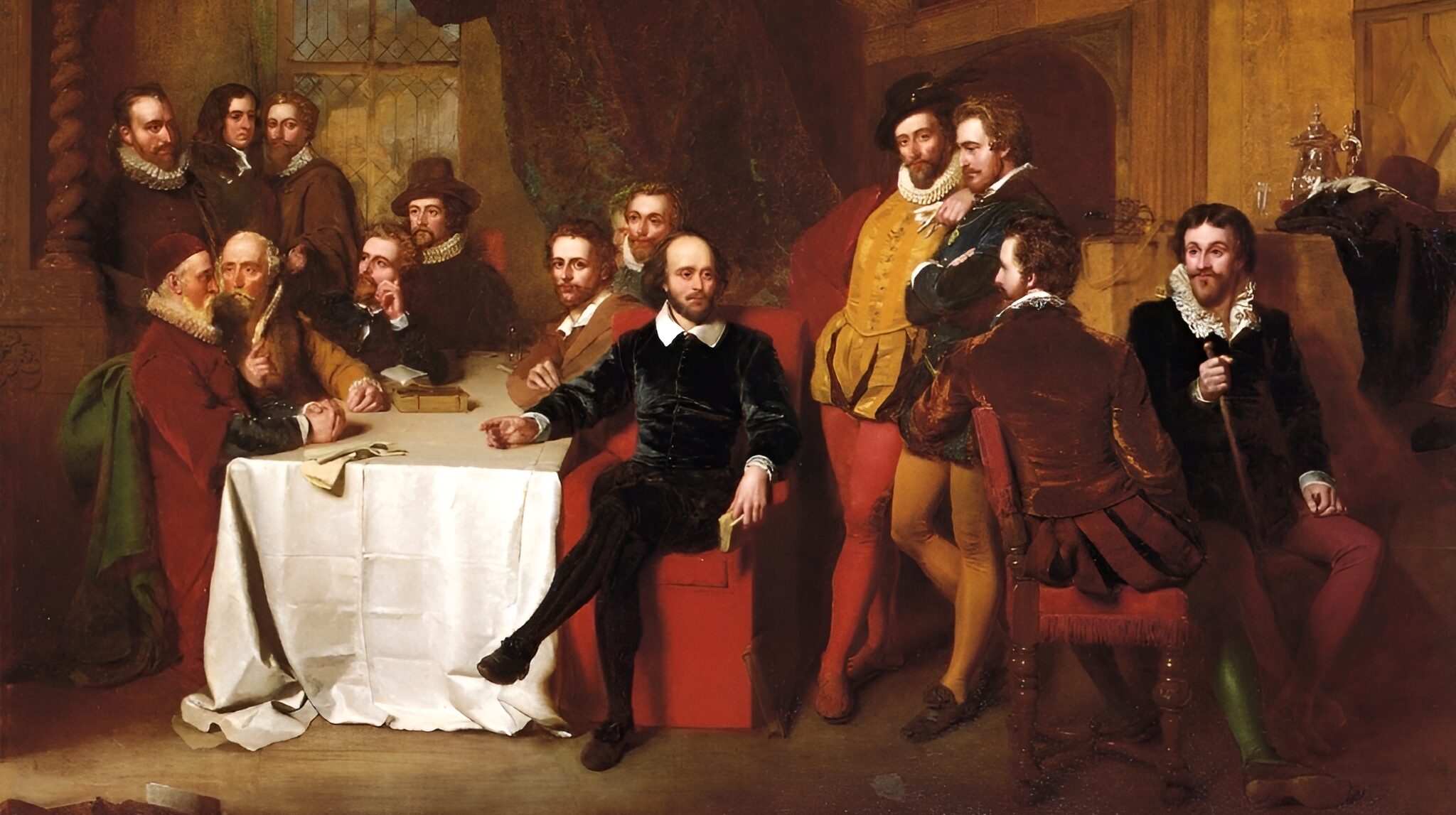

For centuries, the exact whereabouts of William Shakespeare’s only known London property has remained one of literary history’s greatest unsolved mysteries. Destroyed in the catastrophic Great Fire of London and lost to time, it has puzzled academics about its precise location since the eighteenth century.
Now, that centuries-old mystery has finally been solved. A groundbreaking discovery of a previously unknown floor plan has allowed researchers to pinpoint the exact location, layout, and size of the Bard’s historic home on a quiet street in London.
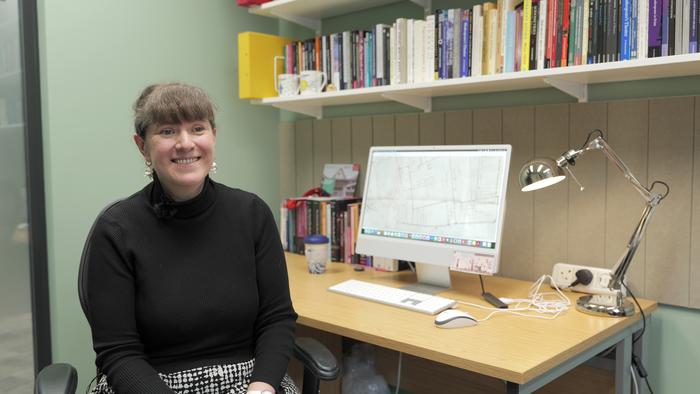
The extraordinary find, made by Professor Lucy Munro, Professor of Shakespeare and Early Modern Literature at King’s College London, not only maps the property Shakespeare purchased in 1613, but fundamentally challenges the long-held narrative of how he spent his final years.
Solving a centuries-old puzzle
Historically, it was understood that Shakespeare owned a property in Blackfriars, believed to be part of “the Great Gate” situated over the entrance to the Blackfriars precinct — a major 13th-century Dominican friary.
Until today, historians and tourists alike have had to rely on an educated guess. A dark-blue City of London heritage plaque mounted on an unassuming nineteenth-century building at 5 St Andrew’s Hill reads: “ON 10TH MARCH 1613 WILLIAM SHAKESPEARE PURCHASED LODGINGS IN THE BLACKFRIARS GATEHOUSE LOCATED NEAR THIS SITE”.
As the phrase “near this site” suggests, locating the precise footprint of Shakespeare’s lodgings has proven impossible, leaving significant gaps in the property’s history.
However, Professor Munro was able to shed unprecedented light on the home by uncovering three distinct historical documents — two housed at The London Archives and one located in The National Archives.
“I was doing research as part of a wider project and couldn’t believe it when I realised what I was looking at – the floorplan of Shakespeare’s Blackfriars house,” Professor Munro said of the breakthrough. “It had been assumed that there wasn’t much more evidence to gather about it, so research on it has laid dormant for a while. These findings really help us tell the complete story of Shakespeare’s Blackfriars house and thanks to this new discovery we now know exactly where it stood.”
The crown jewel of the discovery is a detailed plan of part of the Blackfriars precinct held in The London Archives. Drawn up in 1668 in the aftermath of the catastrophic Great Fire of London, the document confirms the precise location and dimensions of Shakespeare’s Blackfriars house.
For the very first time, Professor Munro’s research paints a vivid picture of the property’s layout and its surrounding neighbourhood. While the portion of the property that originally spanned the great gate does not appear on the post-fire plan because it lacked a foundation, the dimensions of the remaining structure are meticulously recorded.
The surviving ground plan shows a property measuring 45 feet from east to west. It was 15 feet from north to south at its eastern end, narrowing slightly to 13 feet at the western end. While the 1668 plan does not detail the specific internal rooms, it proves the home was highly substantial — large enough, in fact, to have been divided into two separate houses by 1645.
With the location now mapped, historians can easily imagine Shakespeare’s daily London life: looking out of his window at the converted 13th-century friary buildings, or stepping next door for a drink at the neighbouring tavern, the ‘Sign of the Cock’.
Rewriting Shakespeare’s final years
Beyond architectural details, the discovery has massive implications for Shakespearean biographical history. It has long been the accepted historical consensus that Shakespeare retired from his bustling London theatre career shortly after purchasing the Blackfriars house in 1613, returning to Stratford-upon-Avon to live a quiet, comfortable life as a gentleman.
However, the sheer scale and location of the Blackfriars home indicate that Shakespeare likely spent significantly more time in the capital during his twilight years than previously believed.
“This discovery throws into question the narrative that Shakespeare simply retired to Stratford and spent no more time in the city,” Professor Munro explained. “It has sometimes been thought that he bought his Blackfriars property merely as an investment, but we don’t know that this is true, or that he never used it for himself. After all, he could have bought an investment property anywhere in London, but this house was close to his workplace at the Blackfriars theatre.”
Professor Munro highlighted crucial timelines that align with the home’s use: “We know that Shakespeare co-authored ‘Two Noble Kinsmen’ with John Fletcher later in 1613, and this new evidence that the Blackfriars house was quite substantial makes it not inconceivable that some of it may have been written in this very property. We also know that Shakespeare was visiting London in November 1614 – is it not likely that he stayed in his own house?”
From Shakespeare to the Great Fire
The other two newly uncovered documents relate to the eventual sale of the Blackfriars property. They reveal for the first time how, when, and for how much the property left the hands of the legendary writer’s descendants.
The documents confirm that Shakespeare’s granddaughter, Elizabeth Hall Nash Barnard — the daughter of Shakespeare’s eldest daughter, Susanna — finally sold the property in 1665. Tragically, just one year after it left the family’s possession, the historic home was completely destroyed in the Great Fire of London in 1666, along with countless other buildings in the city.
Today, the carefully drawn 1668 plan confirms that the original property covered what is now the eastern end of Ireland Yard, the bottom of Burgon Street, and parts of the late-nineteenth-century buildings at 5 Burgon Street and 5 St Andrew’s Hill. Consequently, historians can now state with absolute confidence that the blue heritage plaque on 5 St Andrew’s Hill is not merely “near” the site, but actually sits directly on the historic spot.
Over the past century, the location has hosted a diverse array of occupants built over Shakespeare’s original footprint. These have included Judd and Co., a printing company; Stoer Brothers & Coles, manufacturers of printing inks; the National Book Association; Heeps, Willard & Co., a firm of builders; Humphries and Taplings, carpet wholesalers; and, more recently, chartered surveyors, investment managers, and residents of apartment conversions.
Dr Will Tosh, Director of Education at Shakespeare’s Globe, praised the historic find. “Professor Munro’s fantastic discovery proves there’s no replacement for human graft in the archive, and our reward for her hard work is a dazzling new sense of Shakespeare the London writer,” Dr Tosh said.
“She’s helped us to understand how much the city meant to our greatest ever dramatist, as a professional and personal home. We at Shakespeare’s Globe are thrilled for Professor Munro, and very proud of our connection with King’s College London through the Shakespeare Centre London – which was established specifically to support and champion these new stories about Shakespeare and his world.”