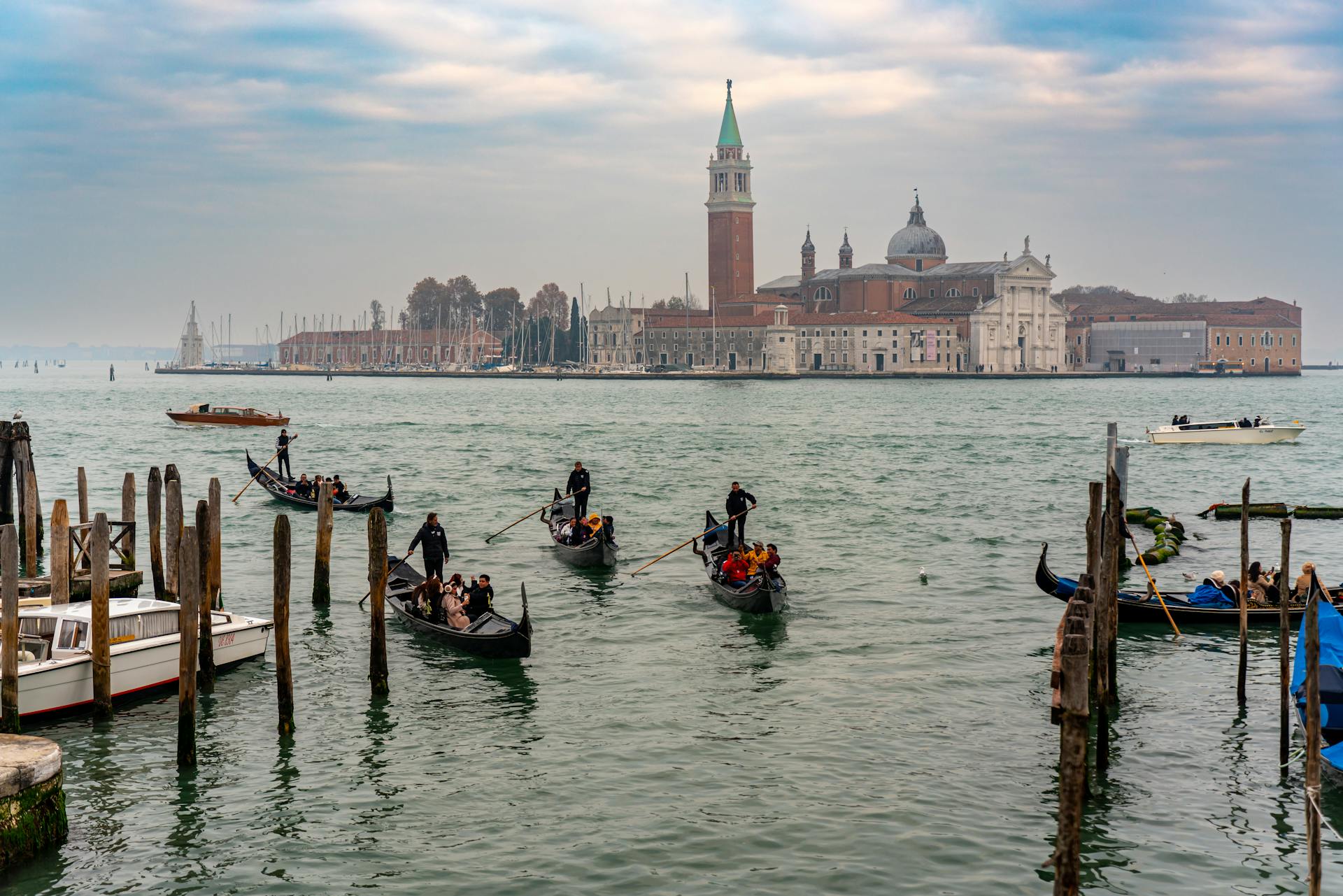

The majestic, floating city of Venice may eventually need to be entirely relocated inland to save it from the devastating impacts of global climate change, according to a stark new scientific assessment.
A new study, published in the journal Scientific Reports, has outlined four potential long-term survival strategies for the UNESCO World Heritage Site as it faces down severe sea-level rise over the next two centuries.
The research team, which includes experts from the University of East Anglia (UEA) and the University of Salento, warns that current coastal defences will inevitably be overwhelmed. Because massive engineering projects take decades to build, authorities must begin making impossible, multibillion-euro choices about the city’s future today.
A drowning history
Venice and its surrounding lagoon have flooded with increasing frequency and severity over the past 150 years. To combat this, the city currently relies on a sophisticated trio of movable barriers situated at the lagoon’s edge.
However, the researchers assessed these existing defences against the latest sea-level-rise projections from the Intergovernmental Panel on Climate Change (IPCC). They concluded that, even with additional local measures, the current movable barriers will only be effective against a maximum sea-level rise of 1.25 metres.
Due to the combined effects of global climate change and the physical subsidence of the ground beneath the city, this 1.25-metre benchmark is projected to be exceeded by the year 2300 — even if humanity adheres to a low-emissions scenario.
Four pathways to survival
To prepare for this inevitable failure, the research team mapped out alternative engineering options, each carrying massive financial and cultural costs.
The authors estimate that once sea levels rise beyond 0.5 metres — a threshold that could be crossed as early as 2100 — new, radical interventions will become strictly necessary. The potential options include:
- Constructing ring dikes: This strategy would involve building physical walls to entirely separate the historic centre of Venice from the rest of the lagoon. The authors estimate this would cost between €500 million and €4.5 billion.
- Building a “super levee”: A far more extreme option involves permanently closing off the entire Venetian Lagoon from the sea. While this strategy could protect the city against a catastrophic sea-level rise of up to 10 metres, it comes with a staggering initial price tag of more than €30 billion and would fundamentally destroy the lagoon’s natural ecosystem.
- Relocating the city: If sea levels rise beyond 4.5 metres, which researchers project will happen after 2300, the only remaining option may be the total relocation of the city, its residents, and its historic landmarks inland. This unprecedented logistical undertaking is estimated to cost up to €100 billion.
For context, the overall cost of building Venice’s existing, temporary flood defence system was roughly €6 billion.
Professor Robert Nicholls, a co-author of the study and Professor of Climate Adaptation at the Tyndall Centre for Climate Change Research at UEA, stressed that every single option requires a painful compromise.
“Our analysis shows that there is no optimal adaptation strategy for Venice,” Professor Nicholls said. “Any approach taken must balance multiple factors including the wellbeing and safety of Venice’s residents, economic prosperity, the future of the lagoon’s ecosystems, heritage preservation, and the region’s traditions and culture.”
He also noted that simply throwing money at the problem will not preserve the city exactly as it is. “Given the high cultural value of Venice, these costs are clearly incomplete and no adaptation measure can sustain the Venice that we see today in the long-term,” Professor Nicholls warned.
Because large-scale interventions such as ring dikes or a permanent super levee will take between 30 and 50 years to construct, the authors are urging immediate planning. They also noted that Venice serves as a grim bellwether for other low-lying coastal areas globally, such as the Netherlands and the Maldives.
“This study shows that all low-lying populated coastal areas should recognise the challenge of long-term sea-level rise and start considering adaptation implications now,” Professor Nicholls said.