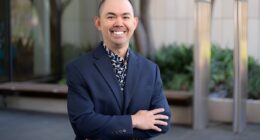

George Miller has declared artificial intelligence is making filmmaking accessible to anyone with a calling for storytelling, positioning himself against widespread industry resistance as he prepares to judge Australia’s first fully fledged award festival for wholly AI-generated films.
The acclaimed Mad Max director told The Guardian that AI represents a democratising force in cinema, with children not yet in their teens now able to make films without raising money. Miller stated: “It will make screen storytelling available to anyone who has a calling to it. I know kids not yet in their teens using AI. They don’t have to raise money. They’re making films – or at least putting footage together. It’s way more egalitarian.”
Miller’s endorsement comes as the film industry remains deeply divided over the rapid advancement of AI. Last week’s unveiling of “Hollywood’s first AI actress”, Tilly Norwood, generated protests from actors’ unions across the UK and US, where the industry is still recovering from last year’s 118-day strike over AI threats. Australia’s Productivity Commission was criticised by Liberals and Greens alike for failing to recognise AI’s potential impact on creative industries.
The director will lead the judging panel at the Omni 1.0 AI film festival scheduled for November, joining out of “intense curiosity” about AI’s evolving role in storytelling. Miller said: “AI is arguably the most dynamically evolving tool in making moving image. As a filmmaker, I’ve always been driven by the tools. AI is here to stay and change things.”
Miller likened the current moment to the Renaissance, when oil paint gave artists freedom to revise work over time, sparking controversy between those arguing true artists should commit to canvas without corrections and others embracing new flexibility. He drew parallels with mid-19th century debates over photography’s arrival, arguing that art must evolve and that whilst photography became its own form, painting continued, with both changing but enduring.
The festival’s founders, Aryeh Sternberg and Travis Rice, positioned the event as a bold bid to cement Australia’s reputation as a global hub for AI-generated cinema. Each submission will be screened for plagiarism and assessed under strict ethical guidelines to ensure technological innovation matches artistic integrity.
Rice argued that AI can give voice to creators in regions where they may be silenced by governments or targeted while filming, citing recent cases in Iran, including director Mohammad Rasoulof and filmmakers Maryam Moghaddam and Behtash Sanaeeha. Omni 1.0 received submissions, including one from Malaysia about police corruption there, which Rice said would be very dangerous to make without AI.
Addressing threats to human employment, Miller took a Darwinian view, noting that his first film, Mad Max, had 30 people on the credits, while his most recent, Furiosa, had over 1,000 credited, with huge numbers being CGI visual effects artists. The director suggested the industry has continually absorbed new technologies whilst expanding rather than contracting employment opportunities.
However, Miller acknowledged AI’s limitations in replicating human collaboration. He recalled a conversation with fellow filmmakers discussing the 2015 British documentary Listen to Me Marlon, which used software to create a 3D rendering of Marlon Brando reciting Macbeth. Whilst one director enthused about future possibilities, another argued: “You’ll have a character who looks like Marlon Brando, but you’ll have nothing close to Marlon Brando. You won’t have the engagement, that performances arise out of the collaborative effort between other actors and directors and writers and so on. You will not have the essence of Brando.”
Miller agreed performances arise from collaborative efforts between actors, directors and writers, stating that AI cannot replicate that human essence. As a judge, he said he will watch for what the industry calls AI slop, emphasising emotional resonance rather than technical novelty as the true measure of any film’s worth.
Rice said the quality of hundreds of entries submitted to Omni 1.0 has increased dramatically since he and Sternberg staged Omni 0.5 in April, with the benchmark for selection being whether a film could plausibly screen on mainstream platforms like Netflix or HBO.