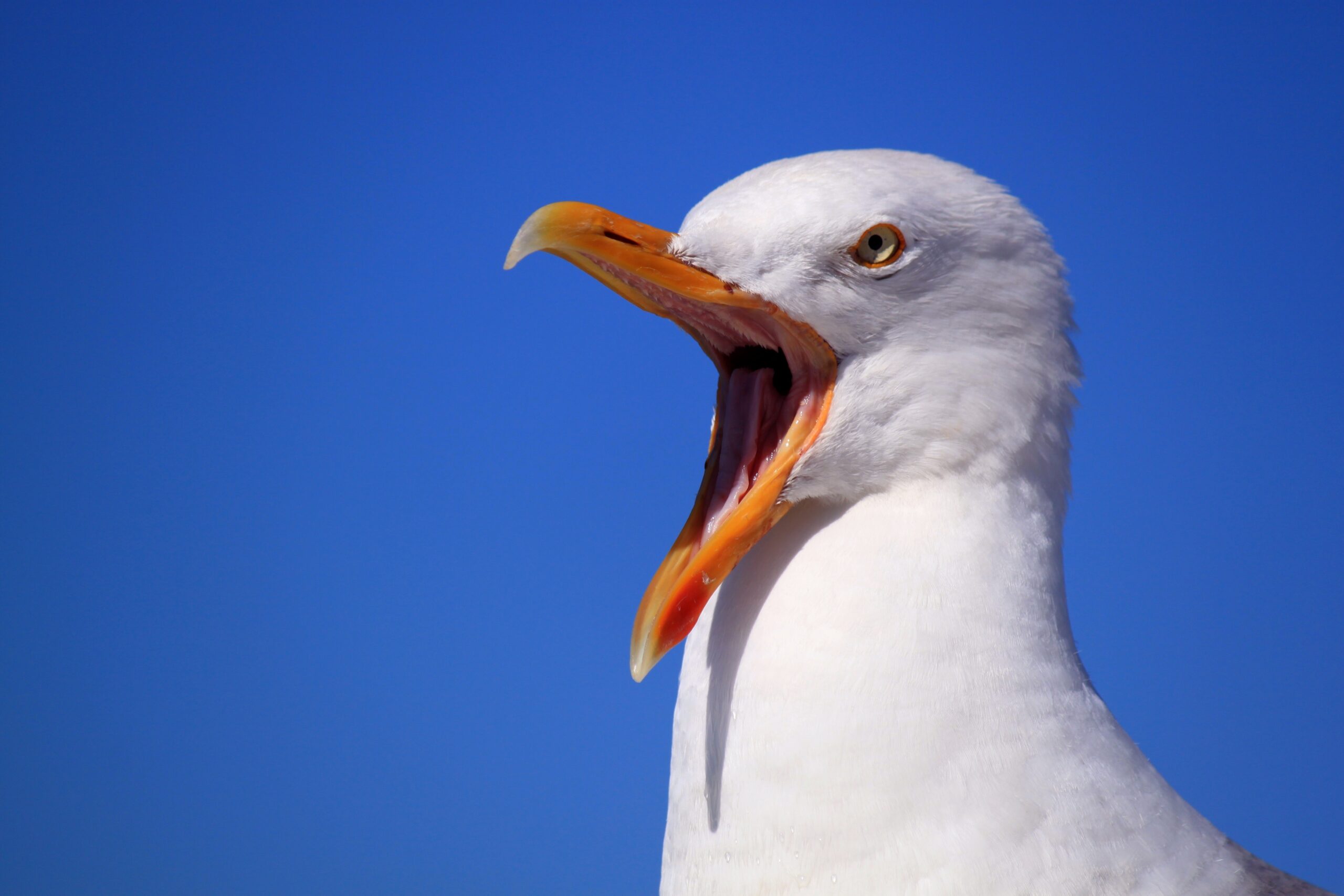

Urban gulls can interpret the acoustic properties of human speech to determine whether to flee or merely step back from food, according to new research from the University of Exeter.
The study, published in Biology Letters, suggests the birds possess a cognitive ability to interpret vocal cues that was previously thought to be restricted to domesticated animals like dogs and horses.
Researchers tested 61 herring gulls in nine seaside towns across Cornwall. To capture the birds’ attention, the team placed a closed box of chips on the ground. Once a gull approached, they played a recording of a male voice saying the phrase, “No, stay away, that’s my food”.
Crucially, the recordings were adjusted so that the shouting voice and the calm speaking voice were played at the same volume. Despite the equal loudness, the birds reacted differently depending on the tone.
Seagulls stay vigilant
Nearly half of the gulls exposed to the shouting voice flew away within a minute. In contrast, only 15 per cent of those hearing the speaking voice fled, while the rest merely walked away or stayed vigilant.
“We found that urban gulls were more vigilant and pecked less at the food container when we played them a male voice, whether it was speaking or shouting,” said Dr Neeltje Boogert of the Centre for Ecology and Conservation at Exeter’s Penryn Campus. “But the difference was that the gulls were more likely to fly away at the shouting and more likely to walk away at the speaking.”
The researchers suggest that gulls pay attention to how words are said, rather than just the volume. This study aimed to identify non-violent methods to deter birds, which are often vilified for stealing food.
“So it seems that gulls pay attention to the way we say things, which we don’t think has been seen before in any wild species, only in those domesticated species that have been bred around humans for generations, such as dogs, pigs and horses,” Boogert said.