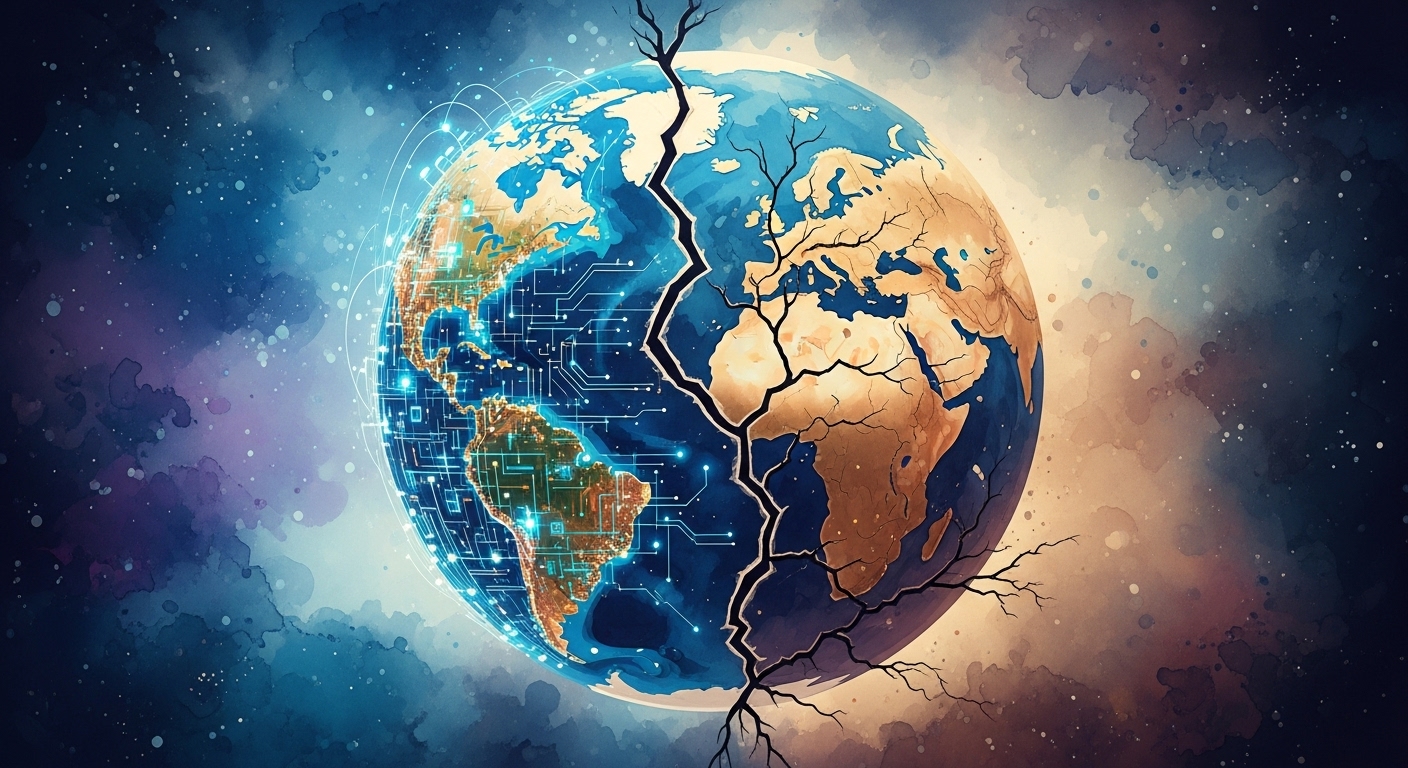

The world’s online population grew by 240 million people in 2025, bringing the total number of Internet users to an estimated six billion, or three-quarters of the global population. However, 2.2 billion people remain offline.
The new data comes from the International Telecommunication Union (ITU) Facts and Figures 2025 report. It highlights a deepening digital divide defined not just by access, but by the quality, speed, affordability, and skills needed to use the Internet meaningfully.
“In a world where digital technologies are essential to so much of daily life, everyone should have the opportunity to benefit from being online,” said ITU Secretary-General Doreen Bogdan-Martin. “This report highlights how today’s digital divides are being defined by speed, reliability, affordability, and skills, all of which we must prioritise as we work toward our mission of universal connectivity.”
For the first time, the ITU report estimated global 5G subscriptions, which now total around three billion, or one-third of all mobile broadband subscriptions worldwide.
While 5G networks are estimated to cover 55 per cent of the world’s population, this access is highly uneven. An estimated 84 per cent of people in high-income countries have 5G coverage, compared with only 4 per cent in low-income countries.
This quality gap is reflected in data usage. The ITU found that a typical user in a high-income country now generates nearly eight times more mobile data than one in a low-income country, highlighting deep contrasts in the intensity of use.
“Meaningful connectivity”
The report stresses that affordability and digital skills are essential for “meaningful connectivity”. While global median prices for mobile broadband decreased, access remains unaffordable in around 60 per cent of low- and middle-income countries.
The skills gap also persists. Data suggests that while most Internet users have basic skills, the development of more advanced capabilities, such as online safety, problem-solving, and digital content creation, is lagging.
The findings confirm that digital development remains closely tied to economic status, gender, and location. The report detailed several persistent divides:
- Income: 94 per cent of people in high-income countries use the Internet, versus only 23 per cent in low-income countries.
- The offline population: 96 per cent of those remaining offline live in low- and middle-income countries.
- Location: 85 per cent of urban residents are online, compared to 58 per cent in rural areas.
- Gender: 77 per cent of men are online, while 71 per cent of women are.
- Age: 82 per cent of 15-to-24-year-olds use the Internet, compared with 72 per cent of the rest of the population.



