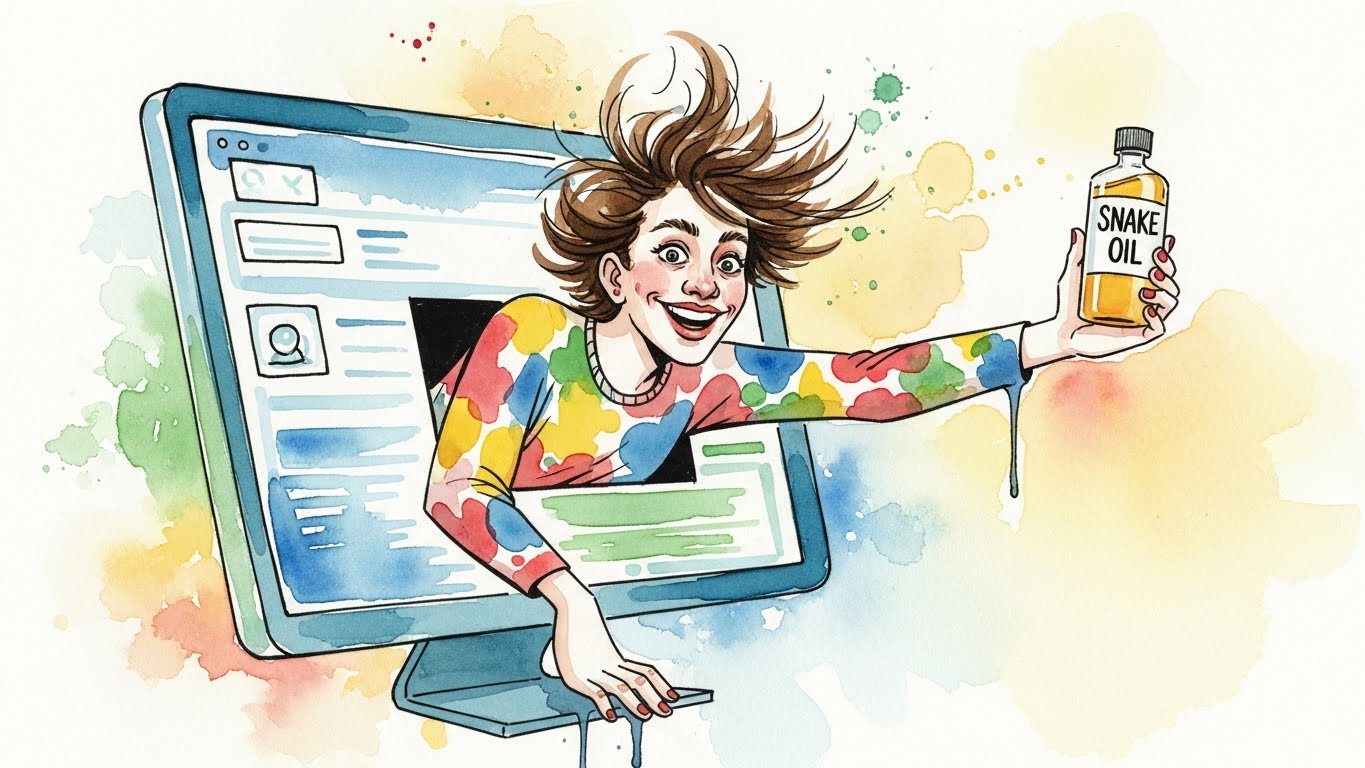

Unqualified social media stars are driving a public health crisis by pushing unproven treatments and inaccurate diagnoses to millions of followers, prompting experts to demand immediate government intervention.
More than 70 per cent of young adults in the US now follow influencers, with over 40 per cent purchasing products based on their recommendations. In Austria, the reach is even more expansive, where 83 per cent of 15-to-25-year-olds report seeing health-related influencer content, leading nearly a third to purchase dietary supplements.
Researchers identified four critical sources of bias in this content: lack of medical expertise, industry influence, entrepreneurial interests, and personal beliefs.
“Such advice can cause psychological, physical, financial, and systemic harm—from inaccurate self-diagnosis and inappropriate treatments to unnecessary spending and higher healthcare costs,” write Raffael Heiss and colleagues in The BMJ.
Overdiagnosis and unnecessary costs
The study highlights celebrity Kim Kardashian encouraging her 360 million Instagram followers to undergo full-body MRI screening, a procedure linked to overdiagnosis and unnecessary costs. It also identifies US chiropractor Eric Berg, who promotes high-dose supplementation to 14 million subscribers whilst selling his own products, some of which received legal warnings regarding lead content.
Other examples include UK-based influencer Chantelle Knight, who promoted a saffron-based supplement as a natural alternative to ADHD medication, and British wellness influencer Ellie Grey, who has claimed that alkaline diets and apricot kernels can cure cancer.
These biases are magnified by “parasocial” bonds that form between creators and followers, making influencers highly persuasive communicators even when peddling unproven interventions.
The analysis points to industry influence as a major concern, noting that only 57 per cent of influencer advertising content on Instagram and TikTok was adequately disclosed in a recent UK Advertising Standards Authority report.
Prison terms for violations
Governments are beginning to act. France has introduced legislation prohibiting influencers from promoting cosmetic surgery and nicotine products, with violations carrying prison terms of up to two years. Similarly, Italy now requires high-reach influencers to register with the national media authority and comply with a formal code of conduct.
The experts argue that platforms must also take responsibility by strengthening fact-checking mechanisms and establishing professional standards for health content.
Despite the risks, the authors acknowledge that patient influencers can provide valuable peer support, particularly for stigmatised conditions.
“I think partly people are finding social media better for answers because it’s not easy to get hold of a medical professional,” says Liam Robertson, whose Instagram page @livingwithulcerativecolitis has 9,300 followers.