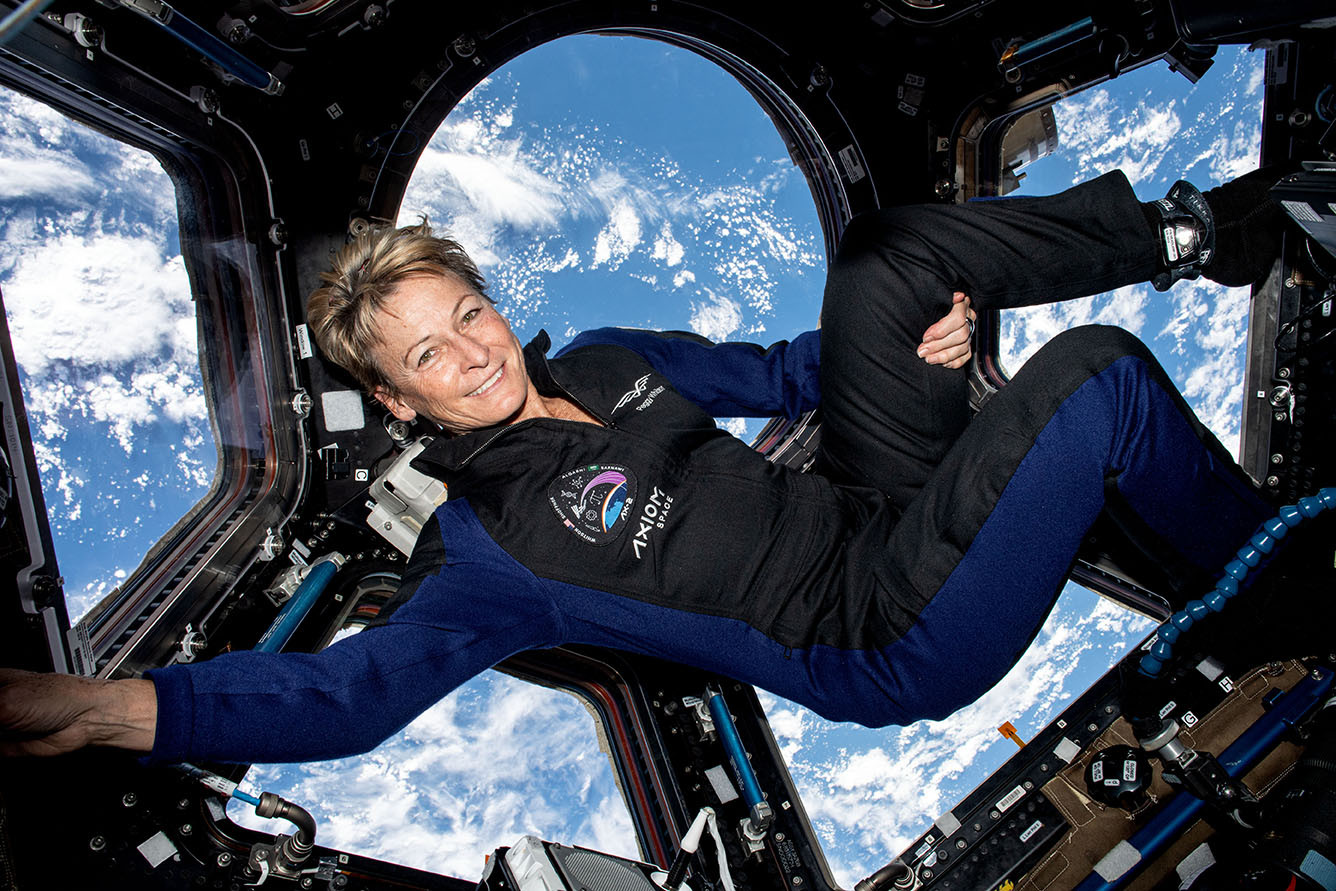

Peggy Whitson, America’s most experienced astronaut, says the next great leap in spaceflight isn’t just about exploration – it’s about manufacturing.
Speaking at Cedars-Sinai in Los Angeles, Dr Peggy Whitson outlined a future in which microgravity is used to develop advanced materials and medical therapies that are impossible to create on Earth.
Whitson, a biochemist with 38 years of experience at NASA and currently the vice president of Human Spaceflight for Axiom Space, shared her vision during a “fireside chat” with Dr Arun Sharma, director of the Cedars-Sinai Center for Space Medicine Research.
“Part of the reason I was excited to join Axiom Space was the fact that one of their goals is manufacturing in space,” Whitson said. “I really wanted to see some of that exciting research take that next step. I think we are going to be able to unlock microgravity, use it as a tool for expanding our capabilities and then bring that capability back to Earth.”
Science at the speed of light
According to Whitson, the future of life science in orbit depends on speed. She argues that waiting for samples to return to Earth for analysis is a bottleneck that needs to be removed.
“I think the most important thing is having the capability to analyse and assess on board what’s happening… and have it already processed using orbital data centres,” she explained.
“Orbital data centres and data architecture will allow us to do iterative science… I think that will be game changing because it will allow us to quickly take advantage of new ideas that come out of the data.”
Space for everyone
As commercial spaceflight opens up, the astronaut demographic is shifting from elite pilots to everyday people, including those with medical conditions.
Whitson highlighted a recent experiment conducted on the Axiom Mission 4 (Ax-4) called “Suite Ride”, which investigated how diabetics might fare in orbit.
“We studied off-the-shelf techniques for monitoring glucose, and tested stability for the insulin on board and injection techniques—demonstrating that diabetes tools operate accurately in space,” she noted. “That’s one specific example of how we are looking at opening up access to space.”
Whitson also offered advice to students hoping to follow in her footsteps, revealing that her own path to the stars was far from smooth.
“I applied to be an astronaut for over 10 years and was rejected until the 10th year,” she revealed.
“But those 10 years were some of the most valuable because of the experience I gained… It doesn’t have to be a straight line to get where you want to go if you are pursuing your goals. Don’t be afraid of failing. You learn from that, and then you make the next run better.”