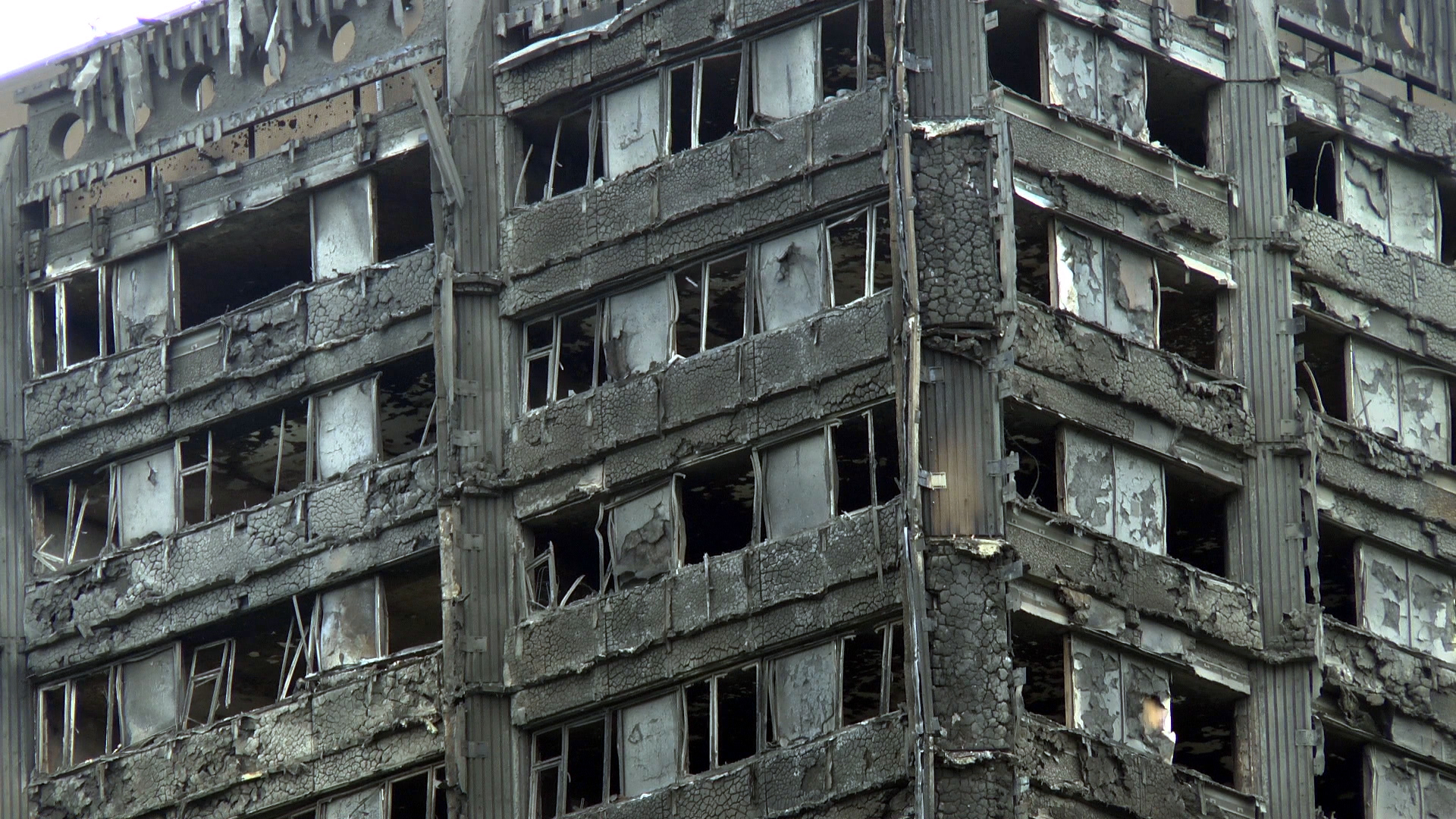

As police and the Crown Prosecution Service advance on historic charging decisions around the Grenfell disaster, a parallel shift toward “proportionality” highlights that structural transparency is the only viable path to commercial survival, writes Shane Moore.
The UK’s construction industry has reached a historic watershed. We are witnessing the removal of any remaining ambiguity in industrial and commercial operations. Based on conversations I’ve had on sites across the UK, it seems that not enough people are talking about the ramifications about to be unleashed.
In May, London’s Metropolitan Police issued an update on Operation Northleigh, the criminal investigation into 2017’s Grenfell Tower disaster. Investigators say they are on track to submit files required to make charging decisions to the Crown Prosecution Service (CPS) by the targeted completion date at the end of September 2026.
Charging decisions are expected before the tenth anniversary of the fire in June 2027, underscoring a profound shift toward ultimate accountability.
Operation Northleigh has examined the role of 15,000 individuals and 700 organisations across the built environment landscape. As of this writing, 57 people and 20 organisations are currently being treated as suspects for criminal offences.
Potential charges under consideration include gross negligence manslaughter, corporate manslaughter, misconduct in public office, fraud, and health and safety matters.
Investigators have gathered 165 million electronic files and taken 14,400 witness statements to build their case. More than 27,000 physical exhibits – including cladding, doors, insulation, windows, and other parts of the building structure – are stored for forensic analysis.
So far, 15 of the 20 core case files have been submitted to the CPS, and the word count of the Met’s summary reports alone exceeds 2.2 million. For context, that is more than 30 average novels. If you took the entire Harry Potter series and added four King James Bibles, you’d still be a Dan Brown’s The Da Vinci Code short of the Met’s report.
To prepare for potential court proceedings, work has begun to develop a full-scale replica of elements of the tower to assist potential jurors.
The government has also published its fourth progress report on the implementation of the Phase 2 Inquiry recommendations. The update confirms that the government continues to expect all recommendations to be implemented by the end of 2029 and notes that, since the annual report in February 2026, a further nine recommendations have been fully completed.
Crucially for project directors, the report details an active review of the higher-risk building control regime to ensure it is applied in a “proportionate way”. The lessons of this dual enforcement timeline cannot be understated for commercial clients, developers, and project directors.
Project resilience relies on a meticulous, unassailable construction record that can no longer be treated as a mere back-office compliance overhead. Now, it is the absolute baseline for a commercial licence to operate.
What follows is an assessment of the shifting regulatory landscape, and what establishing genuine control on a live site actually requires.
1. The clean delineation of accountability
Previously fragmented building control and safety oversight is being systematically dismantled. An example of this could be seen in January 2026, when the Building Safety Regulator (BSR) became a standalone, arm’s-length body under MHCLG.
This represented a transition from its previous position within the Health and Safety Executive, and paved the way for the eventual formation of a Single Construction Regulator. A prospectus consultation closed in March, with the government now analysing the detail of those responses to map out the next stage of system consolidation.
Corporate clients should pay particular attention, as this consolidation means that delegating their compliance requirements carries downstream risks if they don’t maintain rigorous internal tracking. According to the CDM Regulations 2015, the Client retains the primary statutory duty to establish suitable project management arrangements.
Legal accountability cannot simply be signed away or obfuscated via subcontracts. It must now be managed through a live, active overview of dutyholder performance across both the Principal Designer and Principal Contractor roles.
2. Construction products reform
Following the publication of the Construction Products Reform White Paper, the government says it is on a mission to drive system reform. This includes a general safety requirement to bring previously unregulated construction products into a statutory regime. Both consultations closed in May, marking a transition toward system-wide product tracking.
On an active, live construction site, this means there is now a requirement for total control over specifications. Procurement teams cannot treat technical data sheets as passive administrative checkboxes as they may have done in the past. Now, every material used in a building’s envelope, insulation, or compartmentation layers must have a valid chain of custody.
And no exceptions – if a contractor introduces anything that might circumvent supply chain lead times, as may have occurred previously, that change must be formally audited against the overarching fire strategy. Improvised substitutions carry the immediate risk of an absolute refusal of building control sign-offs.
3. Mandatory fire risk assessor verification
In March, the government launched a public consultation on proposals to establish mandatory certification for fire risk assessors. This ran for 12 weeks and closed in June. The subsequent framework was developed in line with Recommendation 26 of the Grenfell Tower Inquiry Phase 2 Report, which focuses on strengthening standards and ensuring that those who conduct assessments have the competencies and capabilities required to do so safely.
This framework also impacts project sequencing during both the design and fit-out phases. Main contractors can no longer rely on general health and safety personnel to validate complex fire safety installations. Competence assurance must be carefully documented at the programme level.
Anyone appointing a contractor or designer must now take reasonable steps to ensure they possess the demonstrable skills, knowledge, and experience required. Every professional contributing to a project’s safety set-up must hold verified institutional accreditations. Without it, they face new regulatory exposure.
4. Fire engineering reform and contractor stability
A successful regulatory system requires a sustainable pipeline of specialised professionals. In March 2026, the government announced that £15 million would be available to take forward critical next steps in reforming the fire engineering profession.
This funding allocation will be used to support the development of university courses, providing strategic bursaries, and expanding research and academic capacity across the built environment sector. These steps directly acknowledge that the technical complexity of modern builds has now outpaced the available pool of qualified engineers.
For project directors, this talent scarcity poses a critical programmatic risk. As just one example (many more will emerge in the future), secure delivery requires engaging certified fire engineering expertise at the concept stage rather than scrambling for a retrospective review during commissioning.
True fire engineering governance involves embedding these specialists directly into design coordination meetings in order to evaluate technical documentation, analyse fire separation parameters, and ensure compliance is factored in before physical construction commences.
5. Proportionality and the “efficiency trap”
The MHCLG’s current consultation on the categorisation of higher-risk building work reflects a clear intent to establish a proportionate approach within building control. The goal is to remove unnecessary documentation burdens on minor, small-scale variations while maintaining robust oversight for safety-critical elements.
However, translating this principle into site practice requires sophisticated risk differentiation. Even small-scale, routine alterations require a clear, upfront layout of health and safety controls.
If an engineering team incorrectly assumes a design modification is low risk, they may fail to record the change in the permanent health and safety record. This would create an automatic compliance gap at handover. A proportionate approach is not a shortcut; it is a system that demands greater precision.
6. Asset tracking and reality of forensic auditing
The scale of Operation Northleigh’s evidence-gathering is staggering. More than 27,000 exhibits were recovered from the tower itself and stored for forensic analysis. This underlines a permanent shift in how construction assets must be tracked. Regulators and forensic investigators operate with an unyielding focus on physical reality, using hard evidence to reconstruct site failures.
This requires exhaustive asset-tracking discipline, backed by photographic evidence, during the construction phase. Every fix, anchor, fire door, and cavity barrier must be mapped and logged against its corresponding technical certification.
Project management teams can no longer view site supervision as a casual quality check. If a facility cannot prove exactly what is installed behind a finished panel, developers face the prospect of stripping back finished works to expose the latent components for physical verification.
7. Structured documentation and corporate transparency
The Metropolitan Police’s confirmation that it is planning for potential court proceedings – including the prospective construction of full-scale physical replicas of tower elements to guide jurors – highlights a critical principle of modern risk management: complexity must be clearly visualisable.
While digital renderings and BIM models are standard tools, they must be matched by absolute structural transparency in the permanent project record.
For capital project delivery, this means documentation must be compiled with the assumption that it will face hostile, non-expert scrutiny. Health and safety files, method statements, and technical records must be transparent, clear, and straightforward.
If a project’s safety strategy relies on obtuse engineering jargon or convoluted risk transfer clauses, it will fail to deliver the commercial reassurance now demanded by lenders, occupiers, and insurers.
8. Multi-contractor delineation
Modern commercial developments operate with an extensive multi-contractor hierarchy. The police’s examination of 700 separate organisations emphasises that complexity frequently breeds ambiguity when dealing with multiple contractors. When a failure occurs, the default corporate response is often for one subcontractor to claim that their work was compromised by another trade downstream.
Managing this risk requires a complete transformation in how Principal Contractors coordinate site handovers. Under CDM 2015, a Principal Contractor must plan, manage, and coordinate the entire construction phase to prevent harm. Delineation of responsibility must be absolute.
When a professional takes over a workplace zone from a previous worker, the boundaries of responsibility must be physically audited and formally signed off. This interface control prevents the “ownership gap,” in which critical safety dependencies have previously been skipped or ignored because each contractor may assume they fall within the other’s scope of work.
9. Stakeholder accountability and public scrutiny
The government’s implementation of a Public Inquiries recommendations dashboard to track progress – alongside active plans to extend the Freedom of Information Act 2000 to Tenant Management Organisations (TMOs) — represents a significant shift toward transparency.
The May 2026 progress report emphasises that resident voice and targeted engagement are core pillars of public policy moving forward. Both government and law enforcement are actively engaged in ensuring that structural progress is properly scrutinised.
For construction teams undertaking major works, this environment requires an active awareness of public and stakeholder risk. Fencing, pedestrian diversions, noise control, and vehicle segregation are meaningful public-facing commitments, not simple site logistics.
Poor site practices do not just generate localised friction. They also create the immediate conditions for planning interventions and enforcement actions, as well as for a breakdown in community trust.
10. Long-latency liability and the corporate record
The human and economic costs of workplace neglect are structural realities that persist long after a project completes. Operation Northleigh’s gathering and searching of 165 million electronic files prove that decisions made under programme stress today are permanently captured in the corporate record.
The duration and scale of accountability that now follows a construction failure is without modern precedent. Shortening a curing cycle, masking a specification variance, or ignoring a subcontractor’s competence gap to protect an immediate milestone may have been seen as an acceptable approach previously, but now it is a profound commercial gamble.
And we must always remember that workplace injury and ill health carry an immense cost to Britain, with HSE data showing that injury and fresh cases of ill health cost an estimated £22.9 billion annually.
The final lesson of the 2026 enforcement baseline is that the human and commercial costs of negligence increasingly reinforce one another. The only viable path to project certainty is the absolute preservation of structural and procedural integrity through every single phase of delivery.
The path forward
The UK’s construction sector is witnessing a permanent tightening of the regulatory, insurance, and stakeholder landscape. The legal foundation remains unyielding: the Health and Safety at Work Act of 1974 requires that everyone protect the workforce and the public so far as is reasonably practicable. Now, this standard will be enforced with forensic precision.
And we must keep in mind that the core issues I’ve outlined here are not isolated challenges. They represent a web of interconnected risks that share a single solution: the adoption of a rigorous, technically unassailable structure of construction governance.
Main contractors and developers who invest in building that governance infrastructure into their programmes from the outset will protect their margins, their portfolios, and their people. Those who attempt to retrofit it under pressure will discover that the system has already left them behind.
- Shane Moore is CEO of QSC Safety Consultants, a Derby-based firm that has spent more than 30 years helping blue-chip industrial and manufacturing clients manage workplace and building safety across high-risk plants and complex estates.