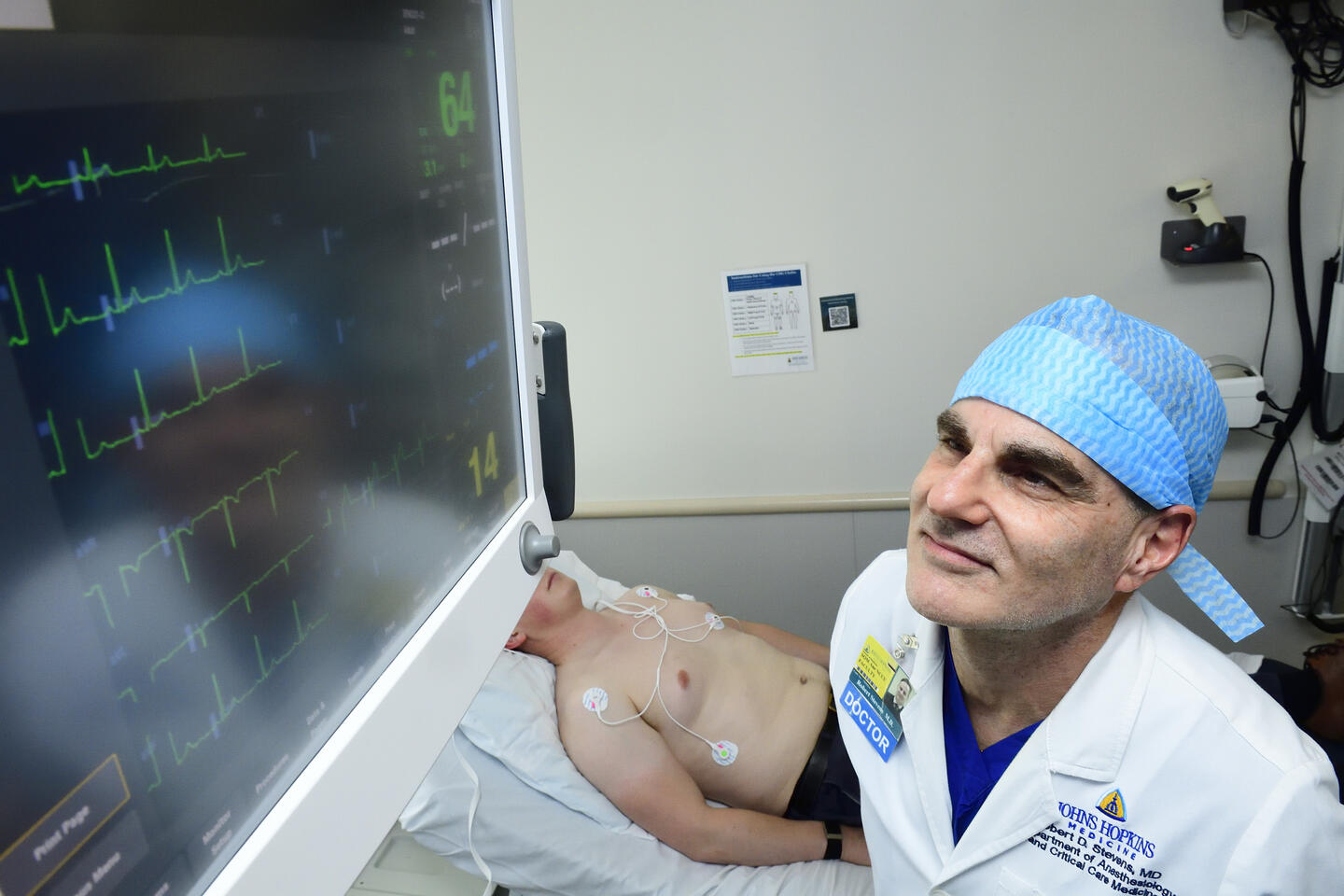

Artificial intelligence has demonstrated superior predictive capabilities compared to medical professionals in identifying patients at risk of life-threatening post-surgical complications, according to Johns Hopkins University research.
The AI model achieved 85% accuracy in forecasting heart attacks, strokes and deaths within 30 days after surgery, significantly surpassing the approximately 60% accuracy rate of traditional risk assessment methods currently used by doctors. The technology analyses routine electrocardiogram readings to detect patterns invisible to medical practitioners.
Johns Hopkins researchers examined preoperative ECG data from 37,000 surgical patients at Beth Israel Deaconess Medical Center, developing AI systems that extract predictive information from standard heart tests performed before major operations. The study revealed that conventional medical risk scoring tools fail to identify complications in approximately 40% of cases.
“We demonstrate that a basic electrocardiogram contains important prognostic information not identifiable by the naked eye,” said senior author Robert D. Stevens, chief of the Division of Informatics, Integration, and Innovation at Johns Hopkins Medicine. “We can only extract it with machine learning techniques.”
The research team created two AI models for comparison. A system using ECG data alone already outperformed existing medical assessments, whilst a “fusion” model combining heart readings with patient medical histories delivered the highest predictive accuracy.
Standard electrocardiograms capture electrical heart signals within seconds but contain broader physiological information beyond cardiac function. This includes indicators of inflammation, metabolism and fluid balance that influence surgical outcomes but remain undetectable through traditional medical analysis.
The superior performance highlights AI’s ability to identify subtle patterns in routine diagnostic tests that escape human observation. Current medical practice typically files ECG results without detailed analysis, whereas the AI system would generate personalised risk evaluations for surgical decision-making.
The technology could transform how medical professionals assess surgical risk by providing more accurate predictions than established clinical methods. Rather than relying on traditional scoring systems with limited precision, surgeons could utilise AI-generated risk assessments to inform patient consultations.
Lead author Carl Harris, a biomedical engineering PhD student, noted the significance of extracting meaningful predictions from brief diagnostic procedures that surpass conventional medical evaluation methods.
Future research will test the AI model with larger patient populations and conduct prospective studies with individuals scheduled for surgery. The team also plans to explore additional medical insights that artificial intelligence could extract from electrocardiogram data beyond current clinical capabilities.
The findings, published in the British Journal of Anaesthesia, demonstrate how machine learning can enhance medical decision-making by identifying prognostic information that traditional medical assessment overlooks.



