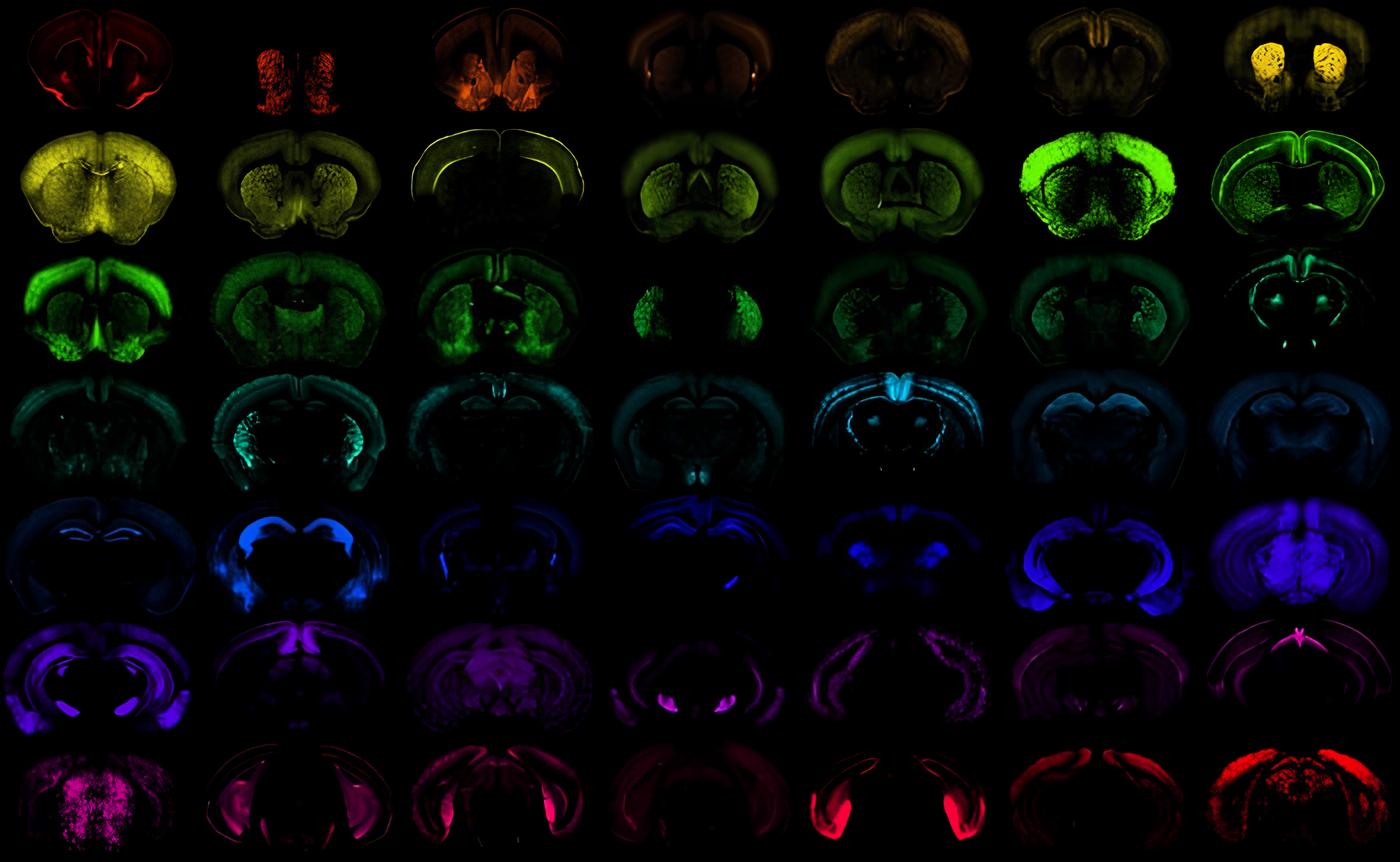

A new AI-powered database containing data from 34 million brain cells aims to finally solve the “language barrier” in neuroscience, standardising how researchers worldwide classify the brain to accelerate cures for Alzheimer’s and Parkinson’s.
The Brain Knowledge Platform (BKP), launched today, acts as a universal translator for brain science by compiling and standardising disparate datasets from international laboratories into a single, navigable map. The tool allows researchers to instantly compare how specific cells behave in healthy brains versus those affected by disease, ending decades of fragmented research where labs used different terminologies for the same cell types.
“This is special because the field has long suffered from fragmentation: different labs working in different species, with different modalities, labelling cell types differently, and with datasets that are difficult to align,” says Shoaib Mufti, senior director of data and technology at the Allen Institute.
“I am excited about the way the Brain Knowledge Platform will unite massive, multimodal, high-resolution datasets — including single-cell and spatial transcriptomics — all in one open, navigable environment.”
Tech giants power the map
The platform relies on core computing infrastructure built by Amazon Web Services, whilst Google developed the AI models that power the system. These tools allow scientists to identify patterns and connections that human researchers might miss, such as subtle similarities in cell behaviour across different conditions.
To make the massive dataset accessible, the platform features an AI assistant that enables natural language queries. Researchers can search for specific molecules and cell features using conversational prompts rather than complex code, effectively democratising access to high-level neuroscience data.
“The Brain Knowledge Platform is a transformative open resource, giving neuroscience a common language for brain cell types much like the Human Genome Project did for genes,” says Joseph R. Ecker, a Howard Hughes Medical Institute Investigator from the Salk Institute for Biological Studies.
Beyond data visualisation, the platform includes a catalogue of genetic tools designed to accelerate the transition from basic research to experimentation. If a researcher identifies a specific brain cell of interest, they can immediately access the necessary tools to study that cell in their own laboratory.
This capability directly connects basic research to potential medical treatments, enabling scientists to identify affected cells in diseased brains and test targeted therapies.
“We’ve created and shared high-quality brain maps since our first mouse brain atlas in 2007,” says Hongkui Zeng, executive vice president and director of Brain Science at the Allen Institute.
“The Brain Knowledge Platform enhances those maps with the novel understanding of cell types we’ve been developing with others in the NIH’s BRAIN Initiative. Like topography on Google Maps, cell type information adds multiple new layers to our maps, helping scientists design better experiments and glean new insights.”