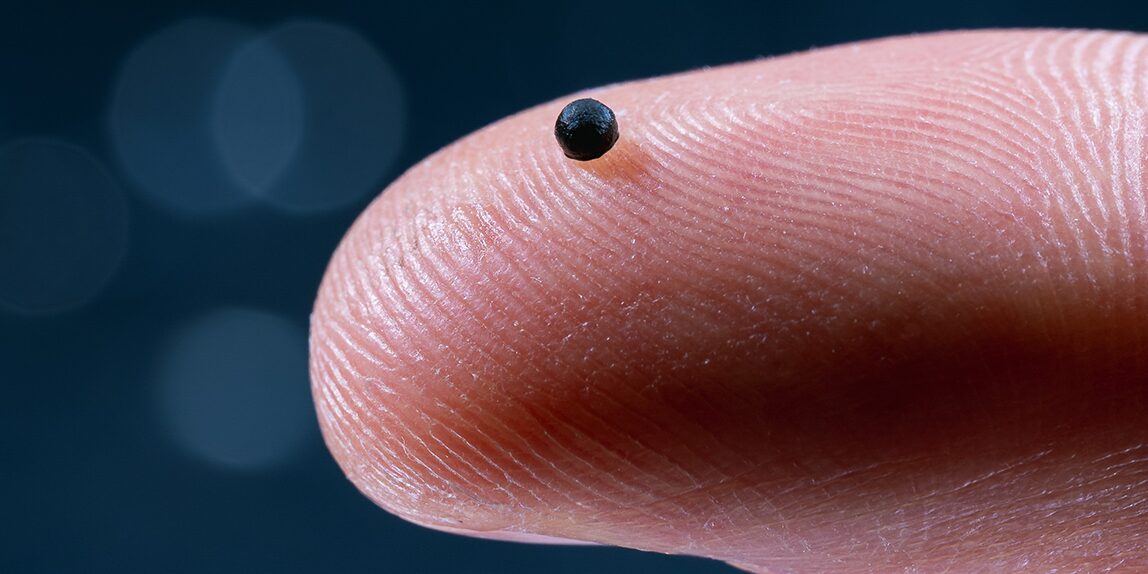

Swiss researchers have built microscopic robots capable of swimming against the full force of arterial blood flow to deliver drugs directly to brain clots, effectively turning the human circulatory system into a navigable highway for precision medicine.
The breakthrough from ETH Zurich addresses the “blunt instrument” problem of current stroke therapy, where powerful dissolving agents must be pumped through the entire body to ensure just a fraction reaches the blockage. The new system uses a soluble gel shell that encapsulates the medication, protecting the body from side effects until the robot reaches its target, whether a thrombus, tumour or localised infection.
“Combining magnetic functionality, imaging visibility and precise control in a single microrobot required perfect synergy between materials science and robotics engineering, which has taken us many years to successfully achieve,” says ETH Professor Bradley Nelson, who has researched microrobots for decades.
Fighting the current
The robot utilises iron oxide nanoparticles for magnetic control and tantalum nanoparticles to ensure visibility under X-ray. To handle the complex fluid dynamics of the human brain, the team developed a modular electromagnetic navigation system that employs three distinct steering strategies.
The device can roll along vessel walls at 4 millimetres per second using a rotating magnetic field. In areas with stronger currents, a magnetic field gradient pulls the robot forward, allowing it to move against blood flow at speeds exceeding 20 centimetres per second.
“It’s remarkable how much blood flows through our vessels and at such high speed. Our navigation system must be able to withstand all of that,” says Fabian Landers, lead author of the paper and a postdoctoral researcher at the Multi-Scale Robotics Lab at ETH Zurich.
Once the robot reaches its destination, a high-frequency magnetic field heats the nanoparticles, dissolving the gel shell to release the specific payload. In more than 95 per cent of tested cases, the capsule successfully delivered the drug to the correct location.
The team validated the system using realistic silicone models now marketed by ETH spin-off Swiss Vascular, followed by successful trials in pigs and sheep. The researchers are now working to move the technology into human clinical trials.



